


By World Model Lab
Google might be about to drop a bombshell.
On the eve of Google I/O 2026, two videos quietly leaked—generated by Google's unreleased new video model, Gemini Omni.
No official announcement, no conference hype—yet social media exploded.
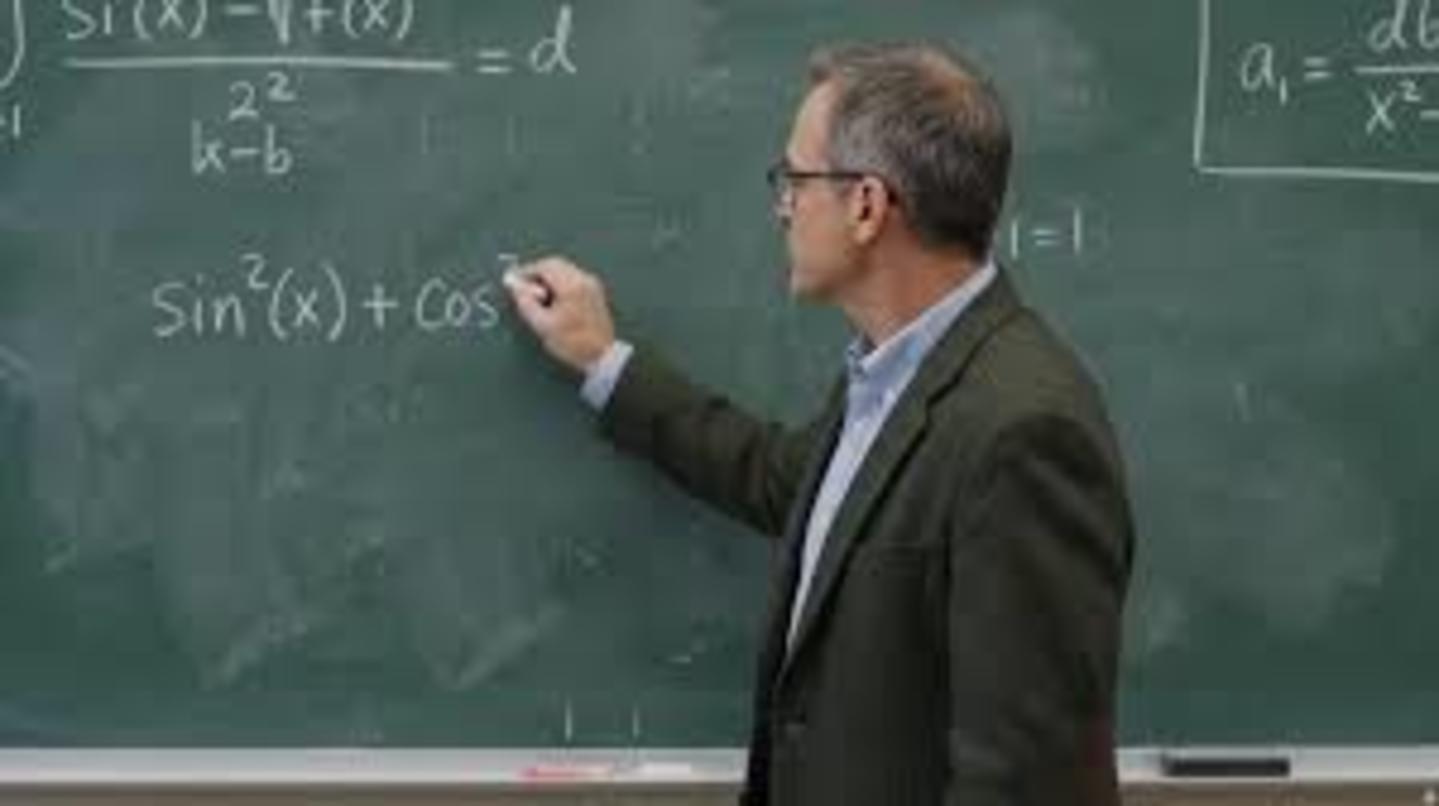
One video shows a professor standing in front of a traditional blackboard, chalk in hand, step by step proving a trigonometric identity.
The other shows two men quietly eating pasta at an upscale seaside restaurant.
Across Reddit and X, the same phrase appears everywhere: "This can't be done with current technology."
Two seemingly mundane scenes—why has the tech community, accustomed to AI-generated content, become so startled?
The Stunning Videos
Take the "professor lecturing at the blackboard" video. It was generated from a single prompt:
"A professor writes a mathematical proof of a trigonometric identity on a traditional blackboard while verbally explaining each step he is currently deriving."
One instruction, no multi-turn dialogue, no step-by-step control.
The result: the professor holds chalk, writes formulas step by step, explains aloud, with smooth visuals and neat handwriting.
It sounds unremarkable.
But if you understand the technical boundaries of today's video generation models, you'll realize that Gemini Omni accomplishes three things simultaneously—things that have never coexisted before.
First: The reasoning is correct.
The proof on the blackboard is mathematically valid—not a visual jumble of symbols that merely look like formulas, but a mathematically sound derivation.
To do this, the model must have, beyond token prediction, a degree of symbolic reasoning.
That is, it knows which formula should appear next, rather than randomly sampling a pattern that looks like math.
Semantic accuracy layered on top of visual generation is precisely why most video models fail in such tests.
Second: Spatial relationships are correct.
Reviewers note that the hand and arm movements while writing "read as natural," and the equations on the blackboard are clearly legible.
Hands are among the most notoriously error-prone elements in AI video generation.
Wrong numbers of fingers, twisted joints, distorted spatial relationships with objects—these are pitfalls that nearly every generation of video models has stumbled into.
A piece of chalk is correctly gripped, leaving meaningful marks on the blackboard; the wrist force and writing angle all fall within a reasonable range.
This is even harder than drawing a normal hand, because the hand must form a complete spatial logic with the blackboard, chalk, and the act of writing.
Third: Temporal alignment is correct.
This is the most underestimated aspect.
As the professor writes a certain derivation step, his verbal explanation matches exactly that step; the blackboard progress stays synchronized with the speech content.
This goes beyond frame-level alignment—it is cross-modal coordination among visual events, semantic events, and temporal events.
If understanding in any dimension goes wrong, the result is "hand writes A while mouth talks C."
Human viewers can perceive such misalignment instantly.
If these three things were achieved separately, one might assume they come from three specialized modules stitched together.
But when all three hold true and coordinate with one another, it is more likely that the model has formed a holistic semantic understanding of "a professor lecturing at a blackboard" at some representational level.
In other words, it knows what this scenario looks like in the real world and understands the constraints among its elements.
That is why the term "world model" has begun to be mentioned frequently after this video leaked.
Alongside the blackboard video, another clip surfaced: two men eating pasta at a high-end seaside restaurant.
The choice of scene was not random.
In 2024, an AI-generated video of "Will Smith eating pasta" went viral.
In that footage, finger counts were wrong, the noodles writhed like living things, and spatial relationships between fork and mouth completely broke down.
That video became a symbol of early AI video generation's shortcomings.

This time, however, Gemini Omni's result has users commenting: "unbelievably real."
What is being tested here is the model's ability to model dynamic interactions between rigid and soft bodies: the fork is hard, the pasta is soft, and when they come into contact, deformation occurs in a way that must conform to real‑world physical intuition.
This was precisely the fatal weakness of earlier generative models in implicit physics simulation.
In two videos, one model tackles two of the hardest categories in video generation: on one hand, synchronizing symbols, speech, and visuals; on the other, human‑object interaction and rigid‑soft body dynamics—and pushes these problems toward a more usable state.
Gemini Omni appears to be a foundation model with a deeper understanding of the world.
The Impact of Gemini Omni
As of now, Google has not released any technical documentation for Gemini Omni, nor any model parameters or benchmark data.
But three interpretations of its architecture are circulating.
The most conservative: Omni is just a rebranding of Veo, with no fundamental change to the inference engine.
The second: Omni is a brand‑new video model retrained under the Gemini architecture, parallel to but independent of Veo.
The most radical: Omni is a true natively multimodal unified model, handling text, images, video, and audio within a single architecture.
Given the performance in these two leaked videos, the third interpretation seems the most plausible direction for the name "Omni"—after all, in Latin, "omnis" means all.
If Omni truly unifies the multimodal pipeline, the focus of model competition will shift fundamentally.
No longer about who can produce more cinematic shots, but about who becomes the sole destination for content creators.
Although we cannot yet call Gemini Omni a world model, it at least shows that video generation is approaching the problem that world models aim to solve: maintaining an interpretable, editable, and continuously predictable scene over time.
The product‑level impact is equally significant.
Today, producing an AI video typically requires chaining together language models for scripts, image models for storyboards, video models for animation, plus external editing software for post‑production.
Each tool switch leads to information loss and style drift.
If Gemini Omni delivers conversational video editing, this entire chain could be replaced by a single dialogue window.
More critically, if Omni is integrated into the Gemini interface and deeply connected with Gmail, Google Docs, YouTube, and Android, that is an ecosystem advantage that ByteDance’s Seedance or Kuaishou’s Kling simply cannot replicate on the distribution side.
Technical capability determines the ceiling, but ecosystem determines scale.
Gemini Omni's true threat may not be how good its generated videos are today, but rather that it places video generation capabilities in a place where competitors have no access—a potential dimensionality reduction strike.
The World Model Moment May Be Here
Over the past few years, the evolutionary path of generative AI has been relatively clear.
Language models learned to read and write, image models learned to see and draw, video models learned to depict motion.
Each modality has been iterating rapidly on its own track, yet an invisible wall has always existed between them.
Models know text, and they know images, but they do not understand the constraints between text and images, between sound and action, between logic and visuals.
If the ChatGPT moment defined the boundaries of language, and the Sora moment defined the boundaries of video, then Gemini Omni points toward what might be the first true "world model moment."
The model is beginning to understand the real‑world constraints between modalities—not just generating each of them separately.
This is a qualitative leap.
Of course, whether Gemini Omni truly achieves this will not be certain until the Google I/O 2026 keynote on May 19.
But the leaked videos send a powerful signal.
What Google will announce on stage—we will know soon.


