Effective April 1, 2026, the new regulatory framework for RF beauty devices officially took effect.
According to requirements from China’s National Medical Products Administration (NMPA), RF treatment devices and RF skin therapy products that have not obtained a medical device registration certificate are prohibited from manufacturing, import, and sale.
This move marks substantial enforcement of home-use beauty device regulation and signals that the industry has entered a new phase of standardized development.
The implementation of these rules means RF treatment devices have completely shed their “small household appliance” status and are now subject to strict oversight as Class III medical devices.
Industry observers widely believe that this not only curbs product safety hazards and misleading marketing from the source, but also accelerates market consolidation — eliminating non‑compliant products and smaller brands, while fostering a “good money drives out bad” virtuous cycle.
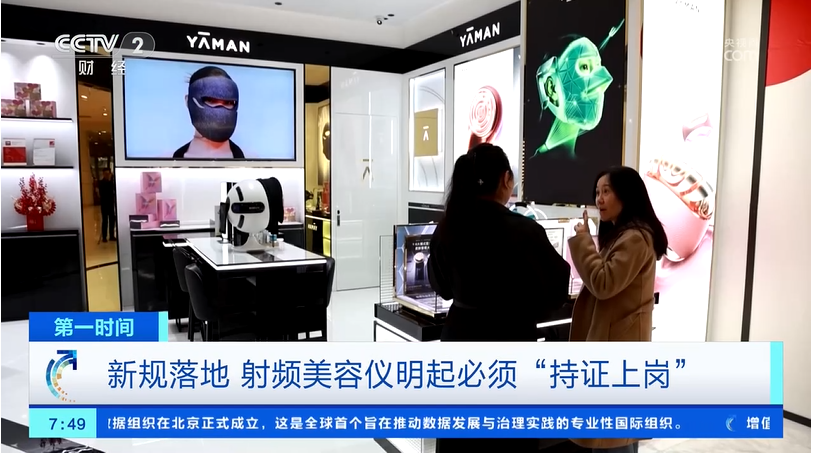
As the industry moves toward a regulated and standardized phase, the market landscape is expected to concentrate among companies with technical strength, compliance credentials, and strong brand reputation.
NMPA-issued medical device approval documents show that YA‑MAN Ltd. (ヤーマン株式会社) obtained a Class III medical device registration certificate for its “RF Skin Therapy Device” in June 2025 (Registration No. Guoxie Zhujin 20253090264), becoming one of the first international beauty device brands to receive such certification.

Before the new regulations were issued, YA‑MAN had already initiated clinical research in 2019 involving Chinese medical organizations and Chinese participants, and published a China-led SCI paper in 2023.
Since then, the company has collaborated with multiple Class A tertiary hospitals, universities, and research institutions in China, conducting multi‑dimensional studies covering clinical trials, animal studies, and cellular research.
After the new rules were published, YA‑MAN partnered with several top-tier hospitals to carry out multi‑center, randomized controlled clinical trials in Beijing, Shanghai, Guangzhou, and other cities.
Its registration clinical trial for RF therapy devices was among the first projects filed with the NMPA, and YA‑MAN became the first home‑use beauty device brand to complete real‑world research in the Hainan Boao Medical Pilot Zone.
Additionally, YA‑MAN collaborates with global leading CROs for clinical quality control, and product testing is conducted by the Beijing Institute of Medical Device Testing.
To date, YA‑MAN has participated in the development of 11 industry-related standards for home-use beauty devices, and co‑authored with medical experts the “Expert Consensus on Selection and Use of Anti‑aging Home‑Use Beauty Devices” and the “Group Standard for Human Efficacy Evaluation of Home‑Use Beauty Devices”.
In terms of medical device product portfolio, YA‑MAN has formed a clear matrix of certified devices, including two Class II medical device certificates for intense pulsed light (IPL) therapy devices, and the newly approved Class III RF skin therapy product — all gradually launched across online and offline channels.
Industry analysis indicates that the new regulations not only raise the bar and increase enforcement, but also provide clear guidance on product quality, claims, and application, helping reshape the competitive landscape and improve overall industry credibility.
In the long run, the industry is shifting from extensive growth to high‑quality development, with safety, scientific validation, and proven efficacy becoming core competitive factors.
(The article represents the author’s independent views and does not reflect the position of iResearch.)


