
By | HuaShang TaoLue
Acquisitions before listing. Swallowing the industry's second-largest player in the first year after listing. Then the third-largest in the second year... Li Yang, a former official who once approved documents in a government office, is rapidly buying up China's premier beauty salons.
Oligopoly
On October 15, 2025, Beautiful Garden, which had just absorbed the industry's runner-up a year earlier, announced again that it would fully acquire Shanghai Siyanli Industrial Co., Ltd. for RMB 1.25 billion (approximately HK$1.369 billion).
Siyanli was no docile prey. It operated 163 lifestyle beauty outlets (118 directly-owned, 45 franchised) and 19 medical aesthetic clinics across 48 cities nationwide, ranking third in the industry.
Siyanli's rise was also built on a solid foundation. From the start, it bet on the expensive German professional skincare line and optoelectronic technology equipment. "Technology makes results visible" was its development creed.
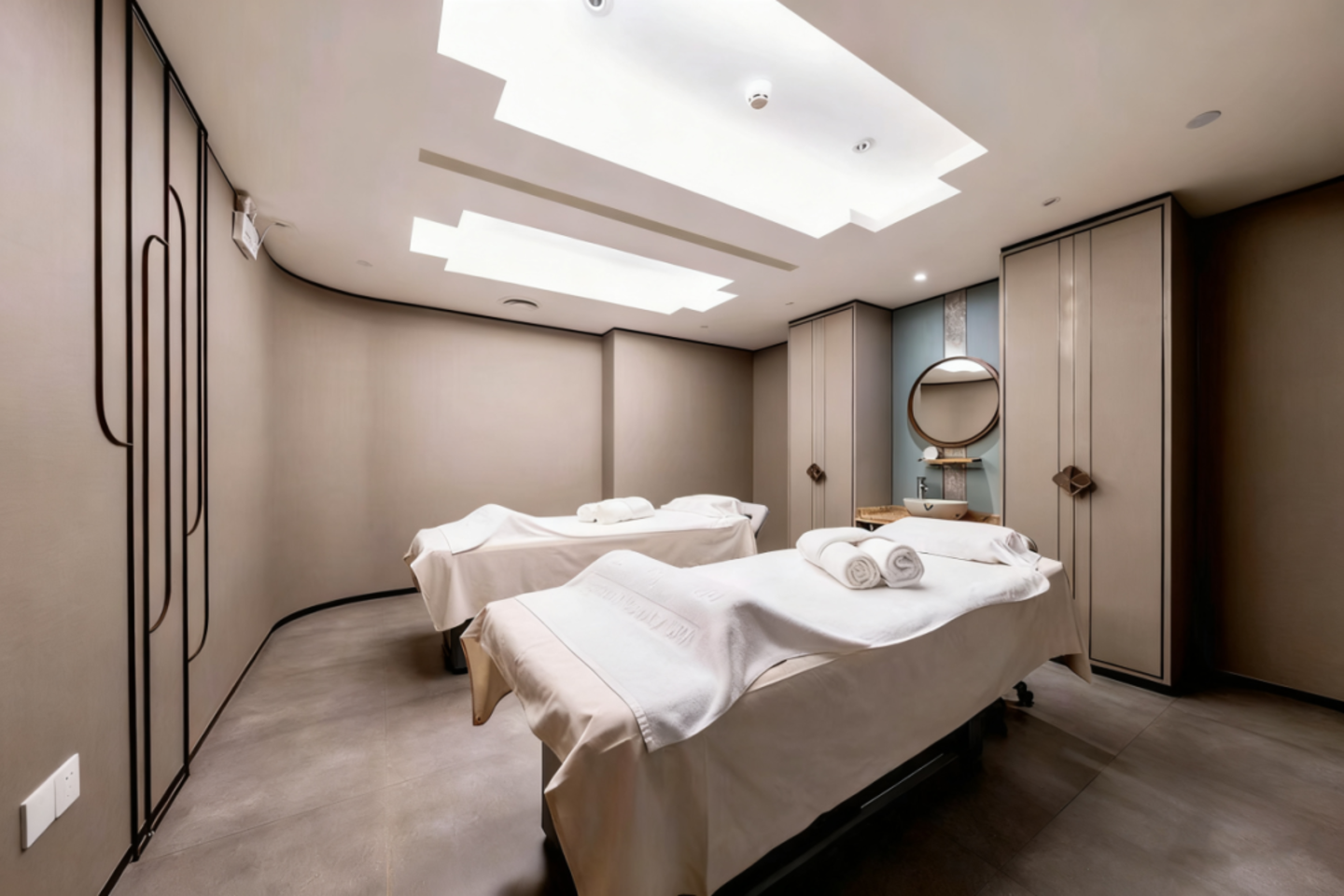
Source: Beautiful Garden
This results-driven approach quickly earned Siyanli an almost cult-like reputation among high-net-worth individuals in first-tier cities like Beijing, Shanghai, Guangzhou, and Shenzhen. Its salons are located only in the core areas of top-tier shopping malls, neighboring luxury boutiques. By the time of the acquisition, over 90% of its revenue came from first-tier and new first-tier cities, giving it strong appeal in the high-end market.
Before 2023, Siyanli was seen as a "perfectly independent" asset in the eyes of capital, and few thought it would ever be acquired. But Li Yang, the shark-like chairman of Beautiful Garden, patiently waited for his chance to capture it.
Siyanli's perfection was built on a heavy asset and operational model: each core piece of equipment was expensive, and each technology upgrade was costly. Direct ownership ensured quality but also brought heavy operational and management burdens.
Even its proud "technology-driven" approach seemed out of step with the digital wave: data remained siloed within individual stores and devices, unable to flow or coordinate across regions; service quality heavily depended on experts and was difficult to standardize and replicate.
As new consumer forces emerged, the younger generation began pursuing a sense of "tech" and "personalization." Industry competition intensified, and with the overall consumer market under pressure, Siyanli started to feel the strain.
Li Yang, who had been watching closely, saw his opportunity. The difficult market conditions made an independent IPO for Siyanli unlikely. If the price was right, its shareholders might accept an acquisition. Moreover, Beautiful Garden could provide what Siyanli needed, achieving a 1+1>2 effect.
Siyanli needed powerful external forces to help it establish a new system, unlocking greater value from its high-end tech brand image, prime shopping mall locations, and tens of thousands of high-net-worth members. Beautiful Garden had the foundation and capability.
And as Li Yang anticipated, the deal went through. Beautiful Garden thus became a major oligarch in China's high-end beauty salon industry, with over 700 stores capturing half the high-end beauty market in first-tier and new first-tier cities.
Consolidation
Before absorbing Siyanli, Li Yang had already led Beautiful Garden through two rounds of acquisitions to take over Guangzhou Nairui, formerly China's second-largest traditional beauty service provider.
In the eyes of this former official turned entrepreneur, there is no such thing as indecipherable "sentiment" or "legend." Any business, any undertaking, can be deconstructed into resources, processes, and data. He sees his role and core competency as—
Not creating these elements, but enabling them to generate greater value.
Beautiful Garden was founded in Haikou in 1993 by Li Yang's wife, Wang Li. At the time, beauty was an emerging industry, but Wang Li proactively introduced foreign equipment, technology, and systems, quickly building a reputable company.
Li Yang, who had been working as a cadre within Hainan's system, provided guidance and support for Beautiful Garden's development, including relocating headquarters to Shanghai and initiating national expansion, drawing on his study and experience of modern enterprises.
In 2003, seeing Beautiful Garden flourish in Beijing, Shanghai, and Chengdu, Li Yang resigned from his deputy bureau-level position in Hainan Province's State-owned Assets Management Office to fully dedicate himself to the company.
At only 44, with a promising political career ahead, this step wasn't easy. But he believed that, despite being an outsider to the beauty industry, he could bring the urgently needed corporate management thinking and experience to Beautiful Garden.
From that moment, Beautiful Garden began to set itself apart from its competitors.
With Li Yang's support, Beautiful Garden systematically planned and upgraded its strategy, operations, capital, and market positioning. It then began to outperform and expand by leveraging superior management practices.
While competitors were still fixated on techniques and results, Li Yang looked beyond to see the unique characteristics of the business: strong cash flow (prepaid), high customer loyalty, and an extremely fragmented market. This was the perfect battleground for rapid expansion and growth through acquisitions.
After building a substantial base through organic growth, Li Yang launched his acquisition drive in 2014 with a clear strategy: specifically target brands that had already established a presence in regional or niche markets to achieve rapid scaling.
A classic case was the 2021 acquisition of "Belle SPA", a high-end beauty brand he had previously invested in. This move catapulted Beautiful Garden to the top of the beauty salon chain rankings and laid a solid foundation for its successful listing on the Hong Kong Stock Exchange in 2023.
In January 2023, Beautiful Garden was successfully listed on the Main Board of the Hong Kong Stock Exchange.
After that, Li Yang's ambitions grew, and he set his sights on the industry's leading companies behind him. His first target was Nairui, then the second-largest player after Beautiful Garden.
Nairui not only had the scale of the industry's number two but also a unique brand identity of "intelligent TCM beauty care" and a stronghold in the Guangdong-Hong Kong-Macao Greater Bay Area, as the number one beauty brand in Guangzhou and Shenzhen.
In April 2024, Beautiful Garden announced it would acquire 70% of the core assets of Nairui Health Consulting Co., Ltd. for RMB 350 million. Subsequently, it continued to acquire the remaining shares, eventually gaining full control. After the acquisition, Nairui's net profit margin increased from 6.5% to 10.4%, and its annual output per store rose from RMB 5 million to RMB 7.5 million.
On March 27, Beautiful Garden released its 2025 annual results: total revenue reached RMB 3 billion, a year-on-year increase of 16.7%; the number of basic medical aesthetics customers grew by 16%; adjusted net profit was RMB 380 million, a remarkable 41% surge year-on-year.
Profit growth significantly outpacing revenue growth demonstrates the high-quality integration effects of Beautiful Garden's acquisitions. How did it achieve this? The core can perhaps be summarized by the company's previously announced three mega-strategies—
Super Brand, Super Chain, Super Digitalization.
Challenges
Li Yang has consistently emphasized in recent years that the beauty industry is ripe for a redo. The logic for redoing it is the "Three Supers."
At the heart is Super Digitalization. Through a super digital middle platform and unified supply chain, Beautiful Garden has forged a powerful "GPU," continuously pushing its super brand and super chain to new heights.
Li Yang championed the investment in a digital middle platform, a decade-long effort costing hundreds of millions, involving a team of over a hundred people building 38 self-developed digital systems.
Through this platform, Beautiful Garden has achieved the integration of three major data flows: "customers online, employees online, business online." It enables service processes, membership management, and marketing actions to be coordinated "nationwide as one chess game," allowing headquarters to monitor operational details of over 700 stores as easily as checking a dashboard.
Whether it's Nairui or Siyanli, once an acquisition is completed, while maintaining their external brand independence, their IT systems, supply chains, and financial controls are fully integrated into Beautiful Garden's "central system," achieving "soul" consistency and pursuing extreme cost and efficiency under that consistency.
The core consists of three moves.
First, leveraging the scale gained from post-acquisition integration to implement centralized procurement and operational management with upstream suppliers. This not only ensures consistent service quality from the source but also directly boosts profits—every percentage point saved from suppliers translates to an extra (or saved) point for Beautiful Garden.
Second, integrating the service middle platform. Stores from different companies can be merged, and similarly, departmental functions and personnel can be consolidated—no need for each company to have its own full set of administrative and support staff. This directly reduces costs and increases efficiency.
Now, Beautiful Garden has also trained an industry-specific large language model, "AI Xiao Nai," to assist employees in customizing wellness plans for clients. At a strategy launch event in late 2025, Gao Wei, Director of Nairui's R&D Center, revealed, "Xiao Nai possesses capabilities equivalent to a five-year TCM master's graduate plus a five-year senior employee, and has been fully deployed to empower frontline services."
In other words, its efficiency integration of human resources goes beyond mere consolidation and functional centralization, advancing to the operational level, using greater technology investment to reduce labor dependence and achieve higher profitability.
The third move, and perhaps the most aggressive, involves adjusting and optimizing prices across different brands. Previously, each company had its own customer base, pricing system, and even competed against each other, driving prices down. Now, combined, they can resist deep price cuts and discounts to consumers, and even indirectly or directly raise prices.
Integration for greater strength. Currently, Li Yang seems to be realizing his plans, but beyond the high growth in book profits, challenges and troubles are also growing rapidly.
The most immediate challenge is a crisis of consumer trust. Many consumers feel that Beautiful Garden's service quality has been consistently declining over the years, especially at franchised stores. Some data supports this: according to relevant statistics, complaints against franchised stores account for 68% of the total, with the most typical complaint being "heavy on sales, light on service."
What angers consumers even more is that, although Beautiful Garden doesn't yet hold a dominant position in the overall market, it is a genuine "monopolist" in the high-end beauty sector of many core cities and has begun leveraging this position to leave consumers with "no other choice."
A consumer from Beijing revealed, "I initially switched to Siyanli because I was unsatisfied with the Beautiful Garden experience. But shortly after, Siyanli was acquired. They started raising prices without improving the experience, taking advantage of the fact that I had no other options. It's very frustrating."
Second, the frequent acquisitions have placed a heavy financial burden on Beautiful Garden. By the first half of 2025, its asset-liability ratio had climbed to 78.45%. Goodwill assets were also high due to acquisitions, and customer prepayments (contract liabilities) reached RMB 2.018 billion.
Furthermore, integrating different acquired brands, tens of thousands of employees, and diverse cultures presents a significant challenge to the group's top management capabilities.
Facing these difficulties, Li Yang is continuously seeking better solutions. For example, reducing franchises and increasing directly-owned stores. Recently, Nairui's franchised stores are being converted to direct ownership, seen as a clear signal of the group reclaiming control.
More noteworthy is the expansion of integrated operations. Beautiful Garden's expansion matrix centered on health is very clear: its medical aesthetics brand "Showcore" was upgraded in March this year, focusing on the "specialized anti-aging"赛道. By the end of 2025, it had 27 medical aesthetics clinics.
In the sub-health medical field, the focus is on functional medicine and women's gynecological anti-aging. Revenue in 2025 was RMB 330 million, a significant year-on-year increase of 62.2%, with 11 directly-owned sub-health medical stores, making it the group's fastest-growing engine.
In the frontier medical direction, Beautiful Garden has established the Qiyan Stem Cell Anti-Aging Hospital in the Boao Lecheng Medical Pilot Zone in Hainan, along with 5 Qiyan Medical Centers in cities like Beijing and Shanghai, initially forming a nationwide medical and health service network.
2025 data shows that about 20% of existing lifestyle beauty members have utilized medical aesthetics or sub-health services. Next, Li Yang is likely to promote the complete integration of the membership systems of the three major brands, creating a cross-brand system for mining customer lifetime value, i.e., increasing per-customer value and operational efficiency by boosting the conversion rate to medical aesthetics/sub-health services.
We might even speculate boldly: what Li Yang is building may not just be a beauty group, but an offline traffic operation platform using "beauty and health" as its entry point.
Lifestyle beauty is the traffic pool; medical health is the ocean of profits.
A Blueprint
Li Yang is not a master beautician, but an "industry integration engineer," even a "disruptor from above." He made Beautiful Garden an industry oligarch not through beauty devices or techniques, but through capital, data, and a systematic mindset rooted in China's unique governance experience.
As an outsider who disrupted the industry, Li Yang, through his practice, provides an important model for how China's highly fragmented traditional offline service industries can undergo modernization and integration using capital and digitalization. He offers a feasible path to substantial commercial returns in industries within everyone's reach: modernizing and consolidating the "inefficient fragmentation" of huge traditional sectors.
However, this highly instructive blueprint also raises a profound ultimate question.
The industry Li Yang is consolidating is, after all, the "beauty" industry. The foundation of this industry lies in personalized experience, emotional connection, and the warmth of creative, vibrant service. As his integration logic, rooted in the system and emphasizing absolute control and standardization, deepens, where does its management boundary lie?
When the "central system," in pursuit of maximum efficiency, tries to classify vastly different customer needs into limited tags and transform the intuition and warmth of artisans into standardized, measurable actions, how does one balance the cold efficiency of the "system" with the warm humanity of "service"?
This game between "system" and "warmth," "scale" and "individuality," is perhaps the most dramatic and captivating core of Li Yang's path of integration, and its significance as a blueprint is just beginning to unfold.


