
Ms. Bei, who has been using various imported supplements since returning from studying in the UK four years ago, looked at the few boxes of Australian vitamins on her shelf and sighed.
"There's an Australian brand that was recently exposed for excessive phthalate levels in a batch, and I had just bought some. Not the same batch, but I didn't dare take them — a few hundred bucks down the drain."
Ms. Bei had heard about the incident a few days earlier.
On April 1, 2026, China Central Television (CCTV) exposed the Youthit fraud. CCTV reporters found that the claimed office address on Dingley Dandenong Road in Melbourne was actually an auto repair shop. The head of Hangzhou Suoxiang Marketing & Planning, the company responsible for Youthit's marketing, admitted that Youthit is essentially a Guangzhou-based enterprise producing domestically, only packaged as "imported from Australia." They also paid for overseas expert endorsements and purchased international awards. The products lacked the mandatory "Blue Hat" certification for health foods in China but still claimed health benefits illegally.
After the exposé, Youthit responded via its official public account, stating that the address was their own property and had been used as an office. They emphasized that the brand is an original brand of Yarra Vibe Pty Ltd in Australia, and that Guangzhou Yarra Source is merely the authorized operator for the Chinese market. Meanwhile, they removed all products and cooperated with multi-department investigations.
Image description: "Originated from Australia", Guangzhou Yarra Source Health Industry Co., Ltd. Source: Youthit official website
"That's a real issue — some brands marketed on Chinese social media as foreign are actually local. I think you need to have research skills, at least check their official overseas websites. I found one brand claiming to be Nordic, but it was just a few Chinese people behind it, with no trace on foreign websites." Ms. Bei waved her hand.
"Even after all that screening, with all the marketing chaos, consumers don't have many real options." Ms. Bei feels helpless about the current supplement market.
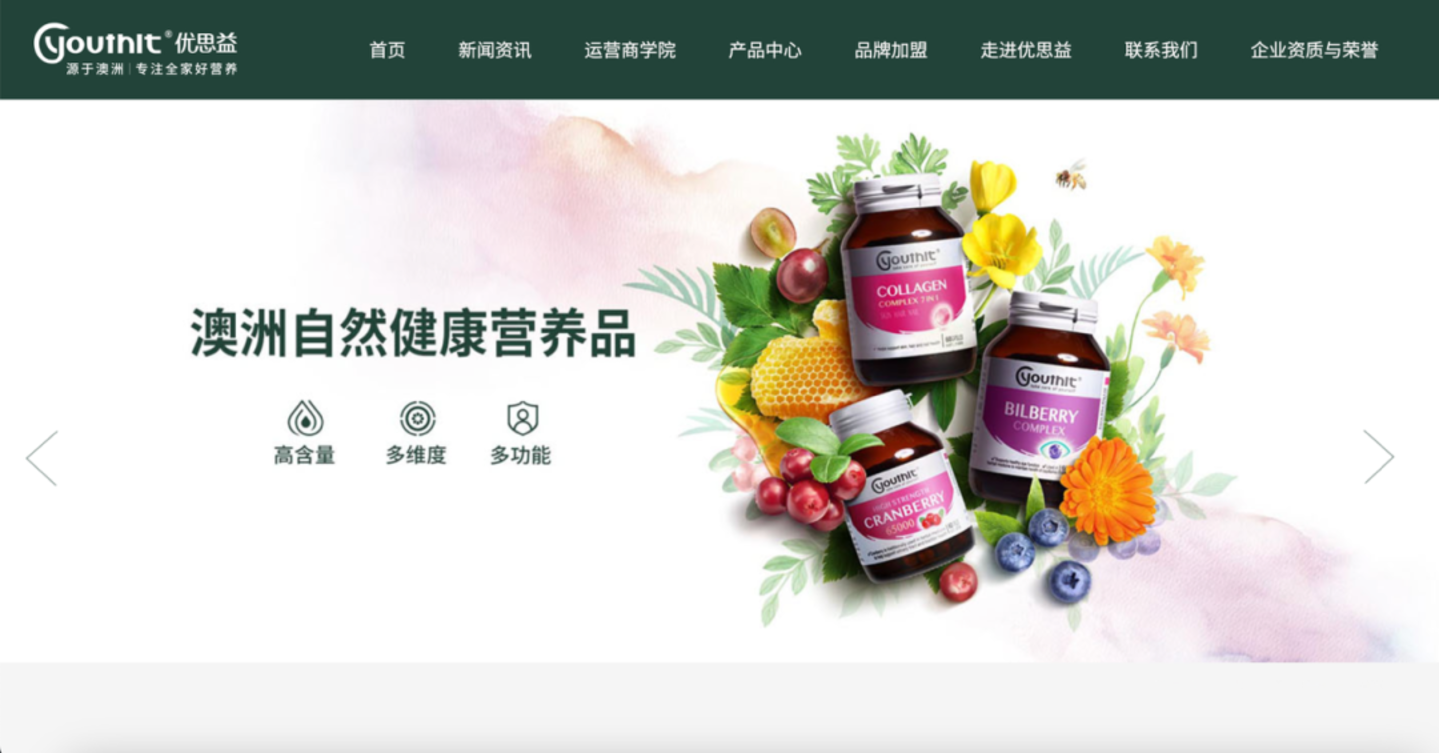
Image description: Fully English packaging. Source: Youthit official website
"This is not an ARTG Certificate document."
Pangjing opened the Youthit brand official website and clicked on the "Corporate Qualifications & Honors" section at the far right, seeing several blurry English PDF screenshots.
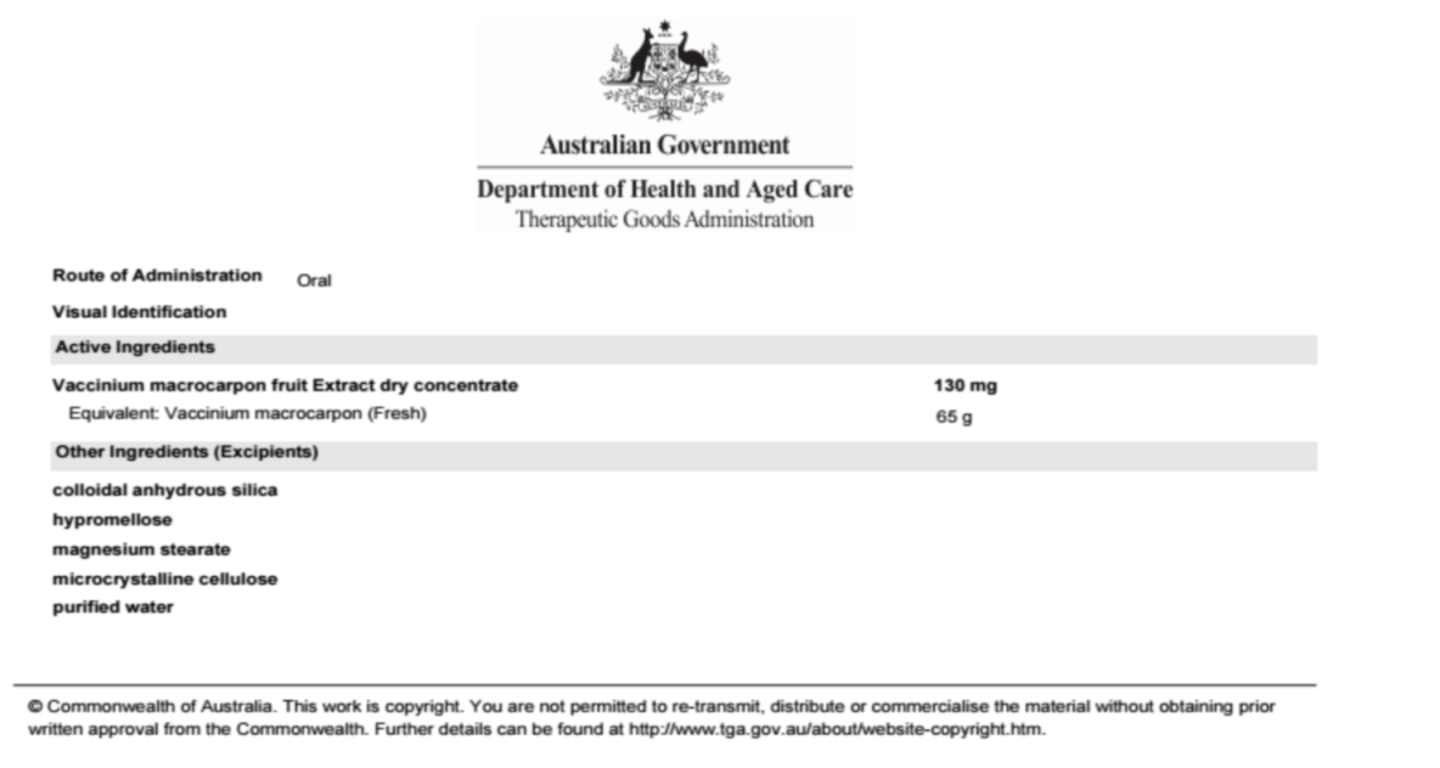
Image description: Youthit's "TGA Certificate". Source: Youthit official website http://www.youthit.com.cn/Include/TGA.html
TGA (Therapeutic Goods Administration) is Australia's regulatory authority for medicines, medical devices, and supplements. Many supplement brands targeting the Chinese market like to claim they have "TGA certification" to boost credibility.
The author consulted Jessica, a former supplement distributor in Australia, and several friends familiar with overseas supplements. With their guidance, we checked the Australian Register of Therapeutic Goods (ARTG) official website and found these documents.
Notably, at the bottom there's a standard disclaimer in blue: "This is not an ARTG Certificate document."

Image description: "This is not an ARTG Certificate document". Source: TGA official website https://www.tga.gov.au/resources/artg/386994
What does that mean? The author consulted industry insiders, who explained: This document merely proves that the product is AUST L "Listed", not "Registered" or a "Certificate".
The meaning of AUST L is: The sponsoring company self-declares that the product meets TGA requirements and submits a listing to the TGA. The TGA does not pre-review the safety and efficacy of AUST L products before they go to market; they only conduct random spot checks.
In other words, promoting an AUST L listing as "TGA certified" or "TGA approved" is misleading to Chinese consumers. Products that go through rigorous TGA assessment are AUST R (Registered), intended for high-risk products like prescription drugs.
Industry insiders noted that even if the records exist and information matches, it only proves that the sponsor "Yarra Vibe Pty Ltd" has legally listed this Bilberry Complex product in Australia — it does not mean that the youthit brand products have any TGA qualification.
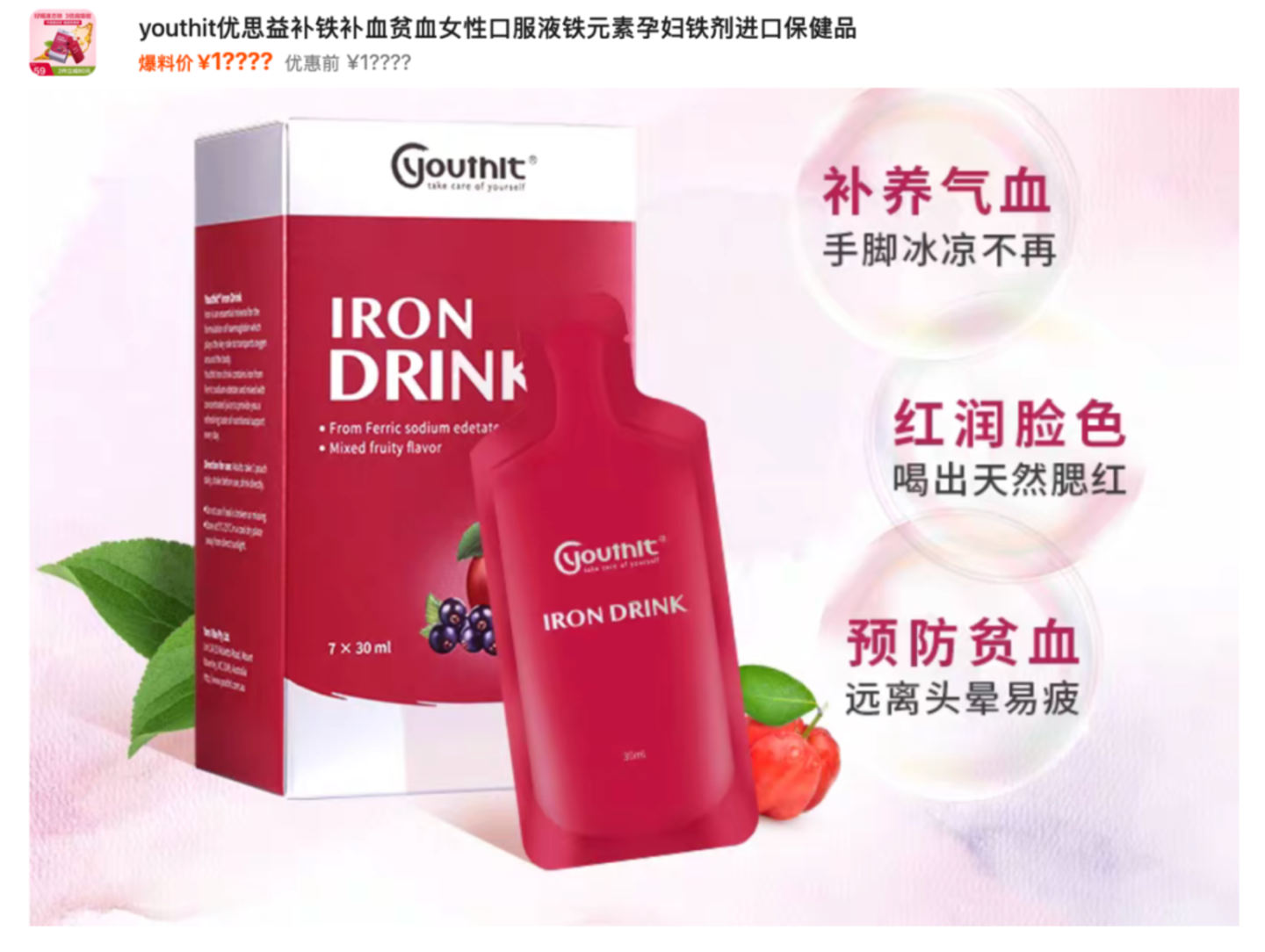
Image description: Youthit's "Women's Ruby Iron Confidante". Source: Taojianghu
"As long as there are people, certificates and trademarks can be bought."
How do you build an "Australian national supplement brand" from scratch in China?
Open a factory in Guangdong for production, find an agent in Hangzhou to purchase an overseas registered trademark, rent an address in Sydney or Melbourne to register a shell company (if you're bold, you don't even need to rent one), hire an advertising agency to design the entire brand image, go through the motions at a bonded warehouse, hire Caucasian faces to play "experts" and "professors", then finally pass e-commerce platform reviews and tap into top live-streaming traffic.
Congratulations — by completing these steps, you've created an "Australian national supplement."
Every link in the chain has a clear price tag. Once any party steps into this lucrative chain, they willingly or reluctantly become complicit.
"If you know people inside the Melbourne government, TGA certificates can be bought." Lily, who lives in Melbourne, told Pangjing's author.
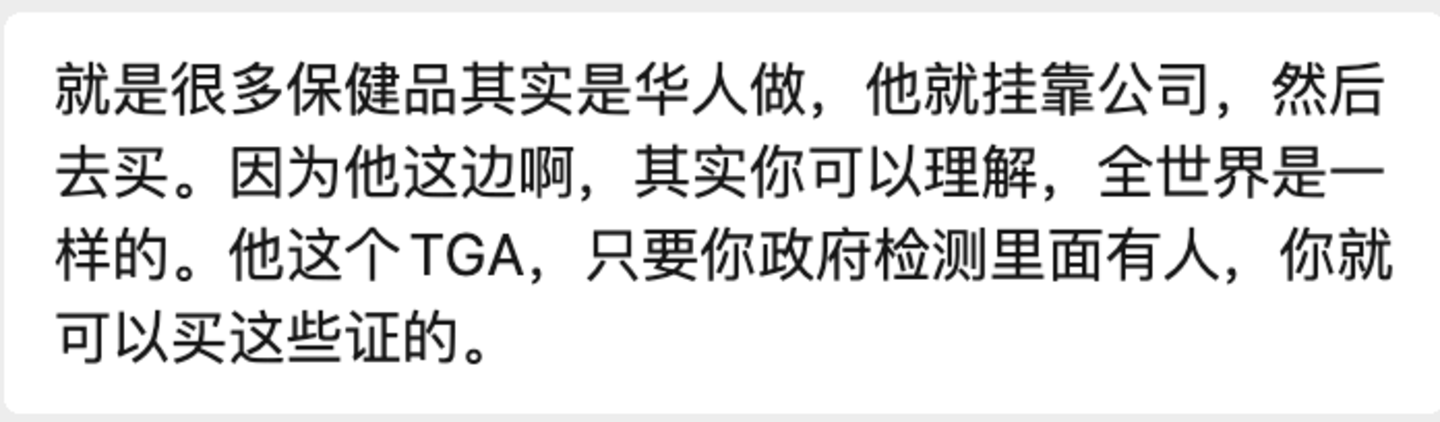
Image description: Lily's revelation to the author. Source: WeChat chat history
"Overseas trademarks and company registrations come with clear price tags. More than one company is doing this — it just depends on their sophistication. When something happens, it comes down to how well each link can withstand scrutiny." Xiao Jun, who previously worked at a Hangzhou branding agency, told Pangjing's author.
"I used to play that kind of 'expert' in short video ads. But the money didn't feel right, so I stopped." A short-film actor once admitted to Pangjing's author.
The chain fed by "70%"
What drives this industry chain to operate so efficiently?
A gross margin of 70% is often cited in the supplement industry. If that number is accurate, it means that for every bottle sold, nearly two-thirds of the retail price is pure profit margin.
Looking at financial reports of leading domestic supplement companies in fiscal 2025, H&H International Holdings had an overall gross margin of 62.5%, By-Health had 67.9%, and Joincare had 62.44%.
These are "overall gross margins" — meaning the margins for adult supplements are even higher.
Marx wrote a frequently quoted passage in Capital: "If there is a 10% profit, capital is assuredly used everywhere; with 20% profit, it becomes active; with 50% profit, it takes risks; for 100% profit, it dares to trample all human laws."
A 70% gross margin — enough to make every link from factories, trademark agents, advertising agencies, hosts, and platforms "take risks" and remain silent.
The role of e-commerce platforms is also intriguing.
In a follow-up report on CCTV News 1+1, Ji Wei, deputy director of the Market Regulation Research Institute at the University of International Business and Economics, stated that third-party platforms (Douyin, Taobao, Xiaohongshu, etc.) have statutory responsibility for food sales — "strict, legal, and procedural."
But the platform commissions and GMV growth from high-margin products mean looser review processes lead to more transactions and greater platform profits. When review becomes a mere formality, the "gatekeeper" quietly turns into an enabler.
After the scandal broke, several celebrity live-streamers, including Together with Hui, Carman Lee, and Gigi Zhang, issued apology statements promising full refunds for the products involved — a swift and decisive cut.
Yet during the days when profits flowed, the selection mechanisms of these live-stream rooms had turned a blind eye to this gray chain.
"Just leave the operations to us."
Ms. Bei worriedly mentioned: "Some domestic supplement brands are really good at community building and celebrity endorsements. WeChat groups always have so-called doctors or nutrition PhDs answering questions. I don't necessarily think they're all harmful — the ingredients might be okay. But I wouldn't buy these products, because I don't have the ability or energy to dig into each product's ingredients. At least big brands don't have major problems."

Image description: An advertisement for supplement community marketing. Source: Social media
Ms. Bei believes the target audience for these brands and communities is likely "older people without medical backgrounds, who also feel anxious about their physical and mental health."
The author experienced a supplement's customer acquisition and operation process from start to finish.
First, offline staff give small gifts in exchange for adding the "community benefits officer" on WeChat Work, who then pulls the person into a group. Then the officer posts daily updates on moments and in the group: promotions, user feedback, expert Q&As, health tips, and pictures and videos proving the supplements' effects on users.
The community copy builds a perfect female image — beautiful, self-disciplined, healthy, elegant — and taking this supplement is part of how she builds her perfect life.
The author stayed in the group for months; the copy was different every day, with marketing messages and campaigns tailored to each holiday and season. The interactions between experts and users felt very real.
Using small gifts to trigger reciprocity, addressing members as "sisters" to create a sense of belonging, using experts and user feedback to build authority and social proof. The daily changing content and limited-time offers prey on people's "loss aversion," making supplements costing hundreds of yuan seem approachable and trustworthy — and gone the next day.
It bypasses rational decision-making and speaks directly to emotions, fear, conformity, and the desire for a bargain — making people "willingly" pay.
Admittedly, the author was once tempted.

Image description: Youthit's depiction of modern women's "struggles". Source: Internet
"The bonded warehouse is a massive black hole."
During the conversation, an industry insider told Pangjing's author meaningfully: "The bonded warehouse is a massive black hole."
In fact, there are countless news reports every year about fake overseas supplements in bonded warehouses. Just this past March 15, Red Star News reported on "Undercover investigation of the fake 'bonded warehouse delivery' industry: 899 RMB 'overseas supplements' actually produced domestically for less than 20 RMB, some with no active ingredients at all."
The article noted: "In this profit chain, ordinary domestic supplements (foods claiming functional or health benefits) are carefully packaged. Manufacturers produce semi-finished goods domestically, declare them to Hong Kong for packaging, and then 'freight forwarders' help process a set of 'import procedures' to bring them into domestic bonded warehouses."
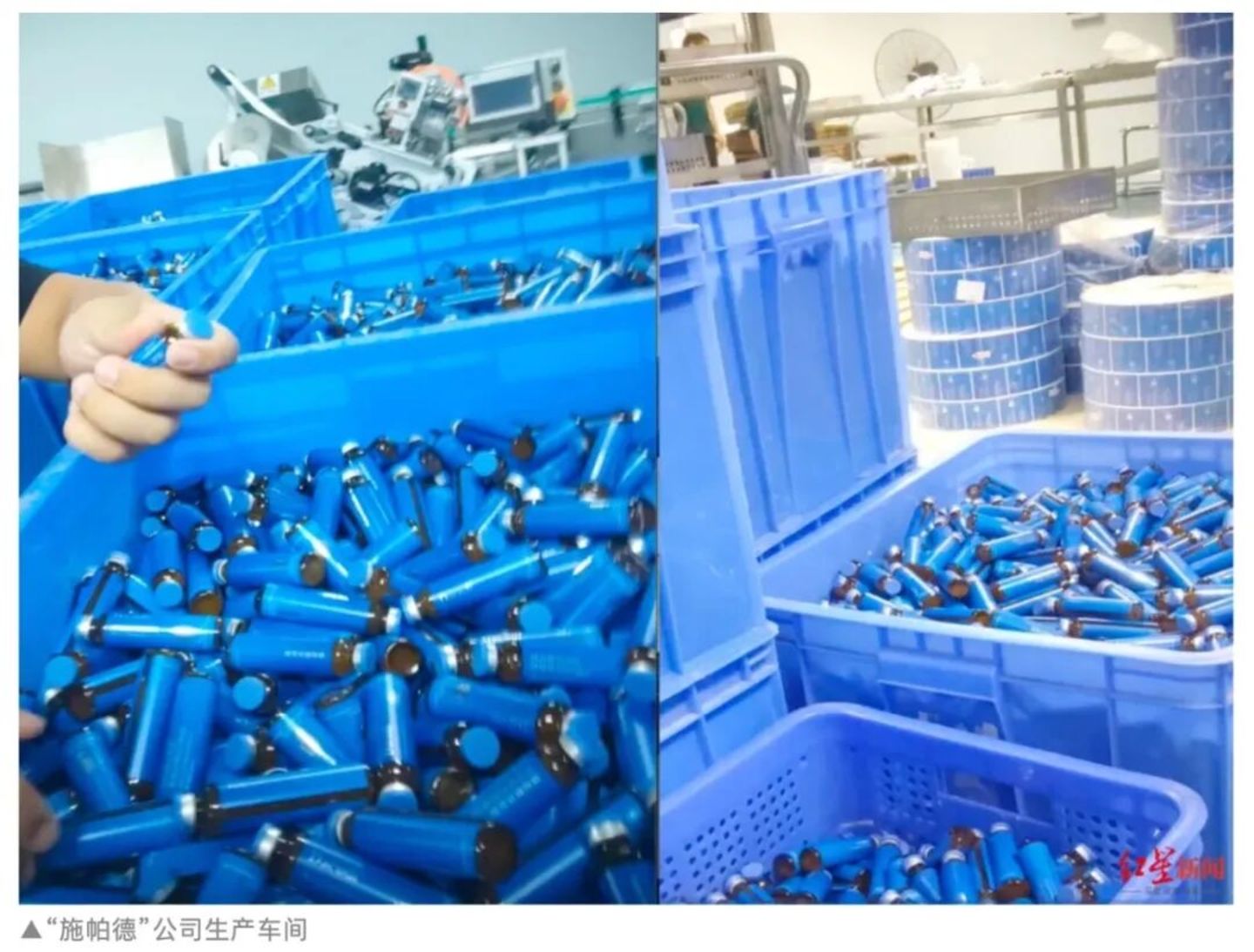
Image description: Some domestic supplement production workshops. Source: Red Star News report
Ms. Bei told the author: "I personally think there are more big foreign brands, and taking supplements is more common abroad. After returning to China, I started considering supplements more than before I left, and I lean toward big foreign brands because they have longer history and larger customer bases." As for purchase channels, she said that even with a premium, she still chooses official Tmall stores or more official channels.
Another PhD student in Beijing, Brother Meng, told the author: "I don't trust any domestic marketing tactics. I generally don't buy from any domestic channels. If I need something, I'll buy it when I go abroad or ask overseas classmates to source it for me."
After returning to China, Jessica switched to selling tea and aged tangerine peel, leaving the Australian supplement business behind, but still regularly takes some European and American supplements. She admitted to the author: "Whether a product works depends on how your body absorbs and reacts to it. Everyone's body is different — you can't generalize."
"We take them ourselves, and our kids take them too. But they're not necessities, and they're relatively expensive, so we generally don't recommend them to others. Because some products are unreliable, we choose carefully." Jessica revealed that her whole family takes imported, direct-sale probiotics, hoping to improve digestion and boost children's immunity, "but the effects take time to see. One course is a year — it might only work after a full course."

Image description: Searching for Youthit on a shopping app yields no results. Source: Shopping app
Behind the "Australian" mask
While consumers have been repeatedly harvested by the word "Australian," these brands have long since performed a sleight of hand.
Not to mention those "domestic goods" that just pass through bonded warehouses — Swisse was fully acquired by China's H&H Group in 2015, and Blackmores was sold to Japan's Kirin Holdings in 2023.
"Australian supplements" — these three words are a carefully constructed consumer illusion.
This is not a story about counterfeits.
Counterfeits are a chronic disease with old prescriptions: seizures, fines, license revocations. Apart from astronomical fines, counterfeit stories are no longer new.
The clever part is that every link in this chain, taken individually, is almost legal.
The factory has a production license, the products are not harmful to humans, the trademark is legally registered, the shell company really exists in the Australian corporate registry, the Caucasian "experts" signed contracts, were paid, and read their lines — they might even actually hold degrees in some fields. The platform review process was completed, and the live-stream scripts were polished by legal compliance. On the surface, no single link constitutes a clear violation, but all the links together form a carefully orchestrated hunt.
False advertising, forging manufacturer names and origins, and violating China's Food Safety Law are the biggest substantive faults in this chain.
Capital does not manufacture trust; capital simply discovers where trust is most fragile and most valuable, and then monetizes it.
And the structure of the platform economy provides a perfect breeding ground for this monetization. When a bottle of supplement with a 70% gross margin is sold through a live-stream, the platform takes a commission, the host takes appearance fees and a cut, the brand makes a killing, and the consumer gets a psychological comfort of "Australian quality living."
In this transaction, everyone gets what they want — until the bubble bursts.


