Young People Chasing Side Hustles Fall Into Beautiful "Traps"
Young People Chasing Side Hustles Fall Into Beautiful "Traps"

By Biao Wai Biao Li | Author: Wang Xiyuan | Editors: Fu Xiaoling, Cao Binling
Every Monday morning, squeezed like a sardine on the subway, Xiao Mi can barely hold back the urge to quit her job.
Five exhausting weekdays, torture for both body and soul, pay only 4,000 yuan in hand. In contrast, during the weekends, all she has to do is take photos and refresh her vintage shop online, yet she easily earns 30,000 yuan a month.
The contrast is so brutal that the thought of “no more clocking in” becomes stronger every day.
Unlike the middle class plagued by side‑hustle anxiety, more and more young people like Xiao Mi treat their side gig as Plan B, hoping to one day escape the daily grind.
According to a survey by HouLang Research Institute, half of young people are already running a side hustle or have tried it, while the rest are itching to jump on the bandwagon.
However, side hustles might have zero entry barriers, but making money from them does require conditions. In this era of “national side hustles”, stories are everywhere: losing money on street stalls, e‑commerce draining savings, or being fleeced for thousands by training agencies before even starting.
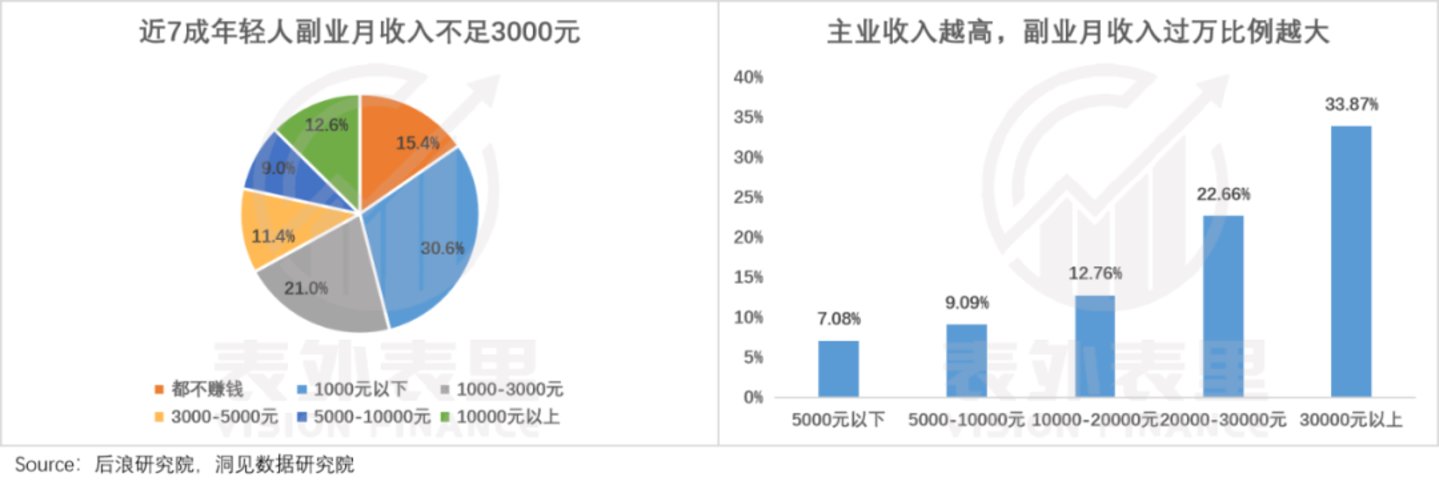
Data shows nearly 70% of young people earn less than 3,000 yuan a month from their side hustles, while those who rake in over 10k are often high achievers in their main jobs as well.
So, faced with obvious side‑hustle traps, how can one earn money decently?
In the stories shared here, someone opens an art studio in a remote village only to have people flock to it; another dodges losses when blind‑box prices collapse; and someone else holds on through three tough years before finally seeing sunshine.
Their journeys to side‑hustle success might just inspire the young dreamers.
A side hustle may have no threshold, but earning money does
Over the past three years, Lan Xin lost 300,000 yuan on her Hanfu shop.
Before opening the shop, she was a Hanfu enthusiast hoping to turn her passion into profit. But after pouring real money into the business, COVID hit, and she had no idea when she would see returns.
“Among the Hanfu studios in my city, I know at least four or five that have closed,” Lan Xin says. She watched firsthand how those shops withered away, and her own fluctuating revenue made her question: should she continue this side hustle?
After much hesitation, she decided to follow her heart and keep the store running. On one hand, she felt responsible for her employees. On the other, she wanted to bet on a rebound: “At that time I thought the pandemic would eventually end, and consumption would bounce back.”

Behind Lan Xin’s confidence and courage was solid backing.
She has a decent day job as an engineer at a provincial state‑owned enterprise, earning a good income, with family wealth to cover the shop’s losses. She hired a manager, so she doesn’t need to invest much of her own time.
In short, the Hanfu shop was never her lifeline. Losing 300k hurt, but she could still keep playing the game.
Then at the beginning of this year, Lan Xin’s shop finally saw “revenge spending”.
During the two‑week Spring Festival holiday, tourists flooded her ancient city, cramming into her Hanfu experience store. The queue stretched from the door down the hallway. With the manager and three or four friends helping, they worked from early morning until midnight just to keep up.
In that period, her side‑hustle revenue hit an all‑time high: at least 30,000 yuan a day, totaling far more than her yearly salary from her main job. The losses from previous years were recouped in days. Since then, business has boomed, and Lan Xin has expanded to three stores.
Looking back, Lan Xin concludes: To run a side hustle, you must have the financial buffer to lose money from the start.
Mei Mei doesn’t have Lan Xin’s deep pockets, but she has loads of free time — working at a central state‑owned firm, she clocks in at 9 and out at 5, no overtime. In terms of time, she leaves 996 workers in the dust.
At a dinner with friends, she was stunned by a friend’s e‑commerce side business: “She just acts as a middleman for very low‑priced items, earning only a few yuan per order, yet she makes over 10,000 yuan a month.”
Feeling like a get‑rich opportunity was waving at her, Mei Mei decided to dip her toes in. But instead of low‑priced goods, she aimed for the higher‑margin blind‑box market.
She started a shop on an e‑commerce platform, doing drop‑shipping without holding inventory. In her mind, she would soon be earning over 10,000 yuan a month, just like her friend.
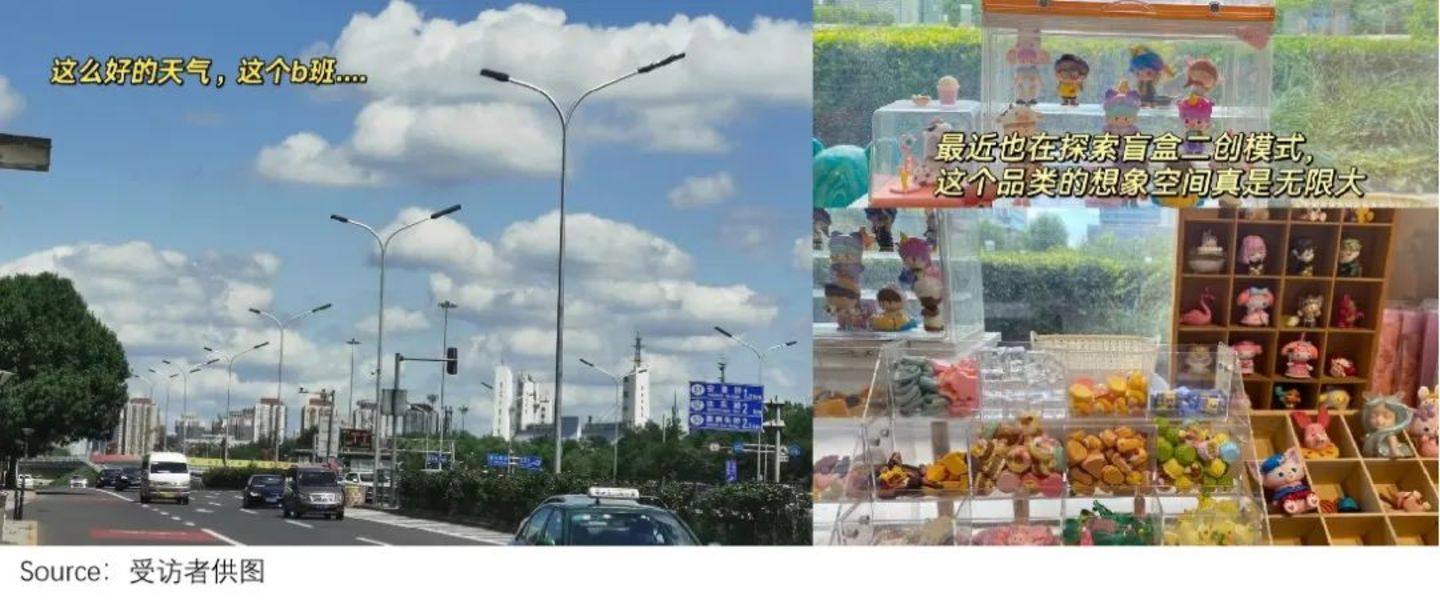
But she quickly realised things weren’t that simple.
“Hi, would you sell it for 69?” Reading a buyer’s message, Mei Mei almost laughed in frustration. The blind box had soared from its original price of 69 to 600 on the secondary market. Getting it at cost was a pipe dream. Still, to maintain her 100% reply rate within 24 hours, she politely responded.
Conversations like this happened every day. After exhausting back‑and‑forth, the customer would often leave her on read without placing an order. Mei Mei could only resign herself to the wasted effort.
Dealing with needy, time‑consuming customers was one thing; then she made a costly mistake trying to snap up a limited edition.
She had been eyeing a highly popular anime‑themed blind box for ages, but it was always sold out. Suddenly, a platform showed stock. Overjoyed, she grabbed several boxes, hoping to ride the wave.
Soon after, the brand flooded the market with more units, causing prices to crash. The boxes became dead stock, and thousands of yuan vanished into thin air.
The volatile industry woke her up: running a side hustle without inside information is like fighting with your eyes closed — you never know when you might fall into an abyss.
Luckily, that loss wasn’t huge. Mei Mei took it as a lesson: “Side hustles are not that easy; you have to be cautious with your money.”
Clearly, money and free time are not enough. To make a side hustle thrive, you also need the drive and know‑how.
Once you fall into the side‑hustle pit, you go all in or go home
At first, the villagers thought Mike was “crazy”.
A young outsider arrived alone in this remote “hollow village”, rented two dilapidated courtyards, and announced he was opening an art studio. For half a year, he poured money into renovations, yet no visitors came.
But Mike, who works as a vocational school teacher during the day, came prepared.
“From the moment I pulled out the first weed in the yard, I started building momentum,” Mike says. He shared the entire transformation process on social media, letting people witness the rundown space turn into a picture‑perfect art studio.
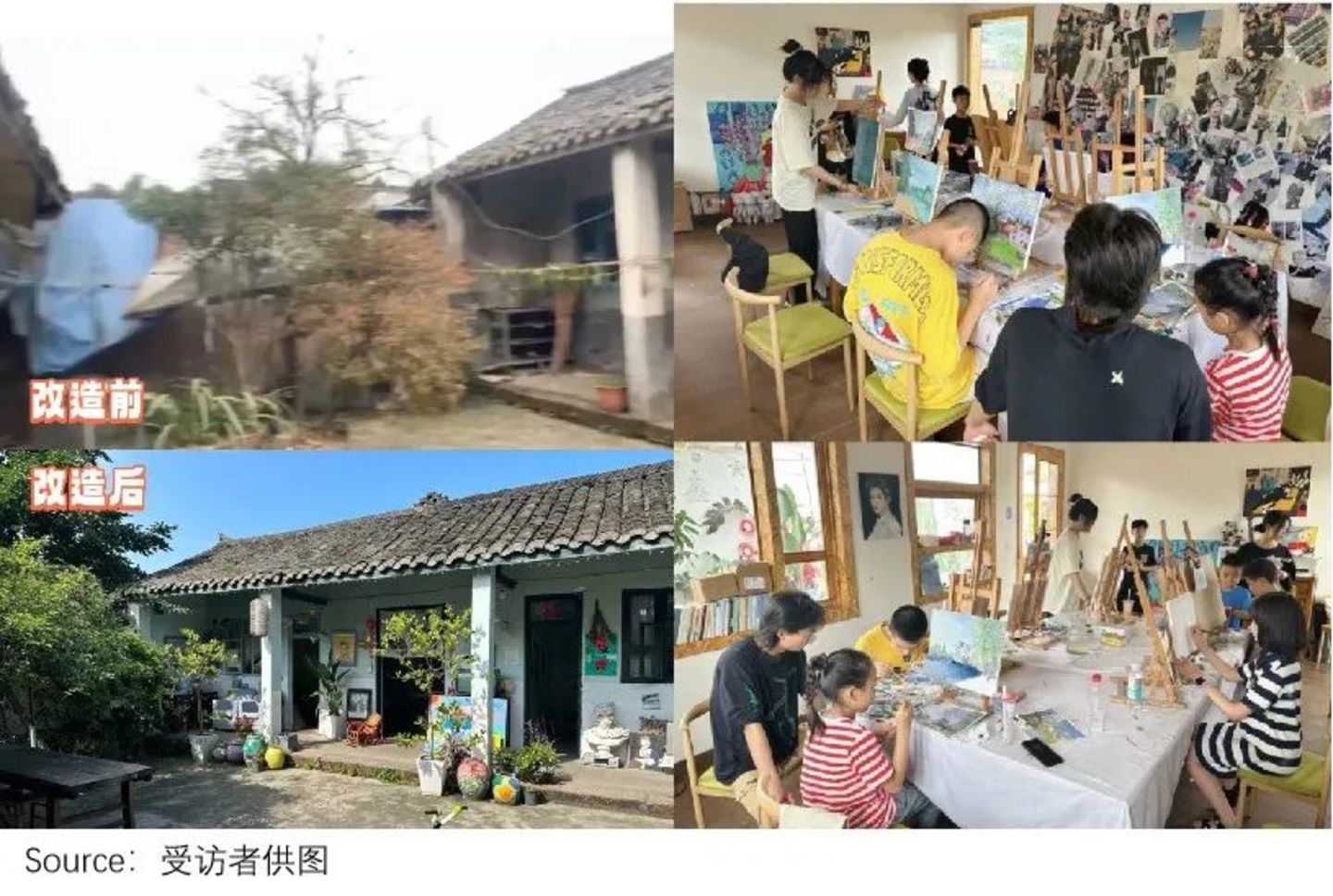
Along the way, he also promoted his systematic teaching philosophy and student works. “I polished every video and caption, and for a long time I rarely slept before 2 a.m.,” Mike recalls.
His efforts paid off when one post suddenly went viral, racking up over a million views. Not only did students and trial‑class customers flood in, but media also took notice. Through interviews and magazine features, Mike built a name for himself in the region.
Then came the copycats.
Overnight, it seemed every courtyard around was being renovated for business — eateries, accessory shops, and of course, other art studios. Competition intensified, and costs skyrocketed. “Rent went from 4,000 a year to nearly 20,000.”
This forced Mike to level up even more. “During summer enrollment peaks, I hire outstanding art students from academies to teach, and I also add a special course — ‘Kids’ Fashion Design’ — taught by professional fashion instructors.”
By staying one step ahead, Mike’s studio became a county landmark: around 100 regular students, five or six batches of customers on weekends, and stable monthly revenue of 50,000 yuan.
In essence, whether from previous experience or pure passion, having a real skill makes a side hustle sustainable. Moreover, self‑discipline is a must.
Qi Ming, who works in internet operations and dreams of earning through web novels, knows this all too well.
Without a formal schedule, his writing was erratic. “I’m tired after work, so I game for an hour and the night is gone. Or I need inspiration, so I read other novels, and another night vanishes.”
This inconsistency caused him to lose readers, and his all‑nighters began to hurt his day job. Once, due to lack of focus, he botched a product release — using the wrong version — and lost an entire quarter’s performance bonus.
Not only did he fail to make extra money, but his main income also shrank. Frustrated, Qi Ming finally woke up and started imposing strict rules on himself.
“I write for 40 minutes and force a 10‑minute break, just like a class. The break alarm goes off every minute to push me back to writing,” he describes his after‑work routine.
He also printed out harsh comments from readers who cursed him for abandoning updates and pasted them on his wall. “Every time I look up and see those harsh words, it drives me back to typing.”
Through such self‑flagellation, Qi Ming’s side hustle finally got on track: he has written 6,000 words every day for a year without a single break.
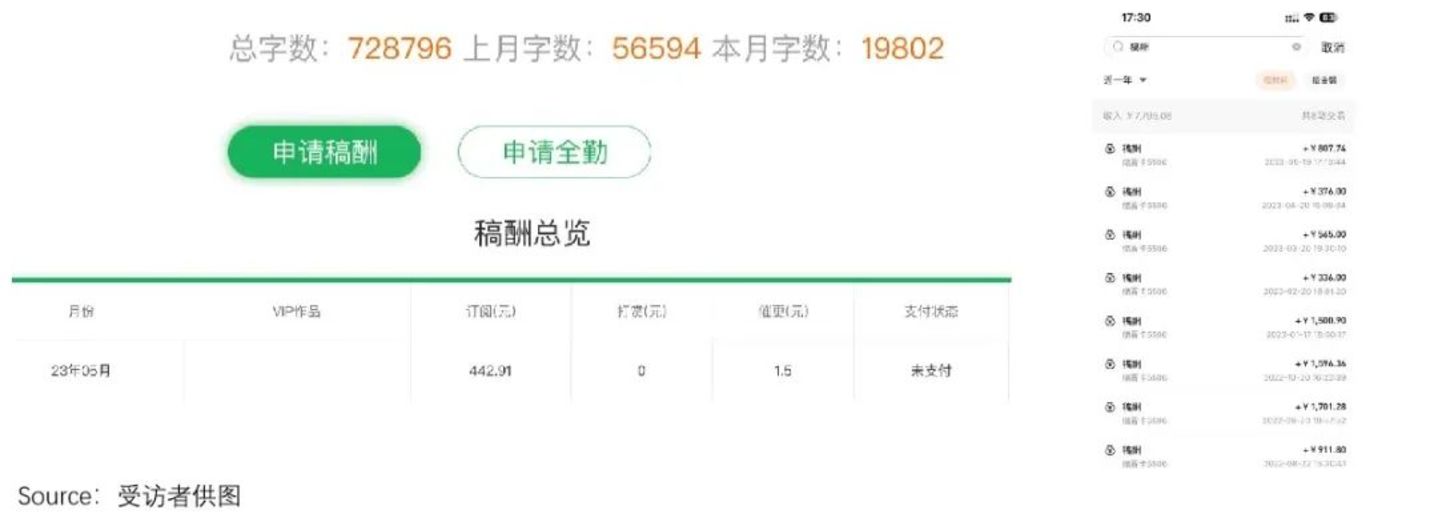
His debut novel is now complete, earning him nearly 10,000 yuan in royalties. That’s nothing compared to authors who make hundreds of thousands, but it’s deeply encouraging — proof that persistence pays off.
Compared to Qi Ming’s proactive change, Mei Mei’s awakening came more by chance.
She randomly listed a TV‑drama‑themed blind box that she personally found interesting, and it exploded — orders jumped from a dozen to several hundred. Without sleeping, she scoured platforms for the rare “secret” figures and resold them, pocketing another profit.
One lucky hit earned her 20,000 yuan, giving her a taste of success and making her take her side hustle seriously.
She took courses to systematically learn the rules of the secondary collectibles market. “To seize opportunities in the blind‑box aftermarket, you need a sharp eye for selection. You have to be proactive.”
With renewed ambition, she spends her days studying e‑commerce tools, tracking real‑time trends: “Which brand just launched a new product?” “Which product just blew up on short‑video platforms?” She also frequents mall pop‑mart and blind‑box stores to observe foot traffic for different releases.
Her efforts soon paid off. Scrolling through social feeds, she noticed a co‑branded toy from a certain restaurant chain generating huge buzz but available in very few stores. She quickly found a source and stocked up. As expected, her listings sold out instantly, earning her 30,000 yuan in three days.
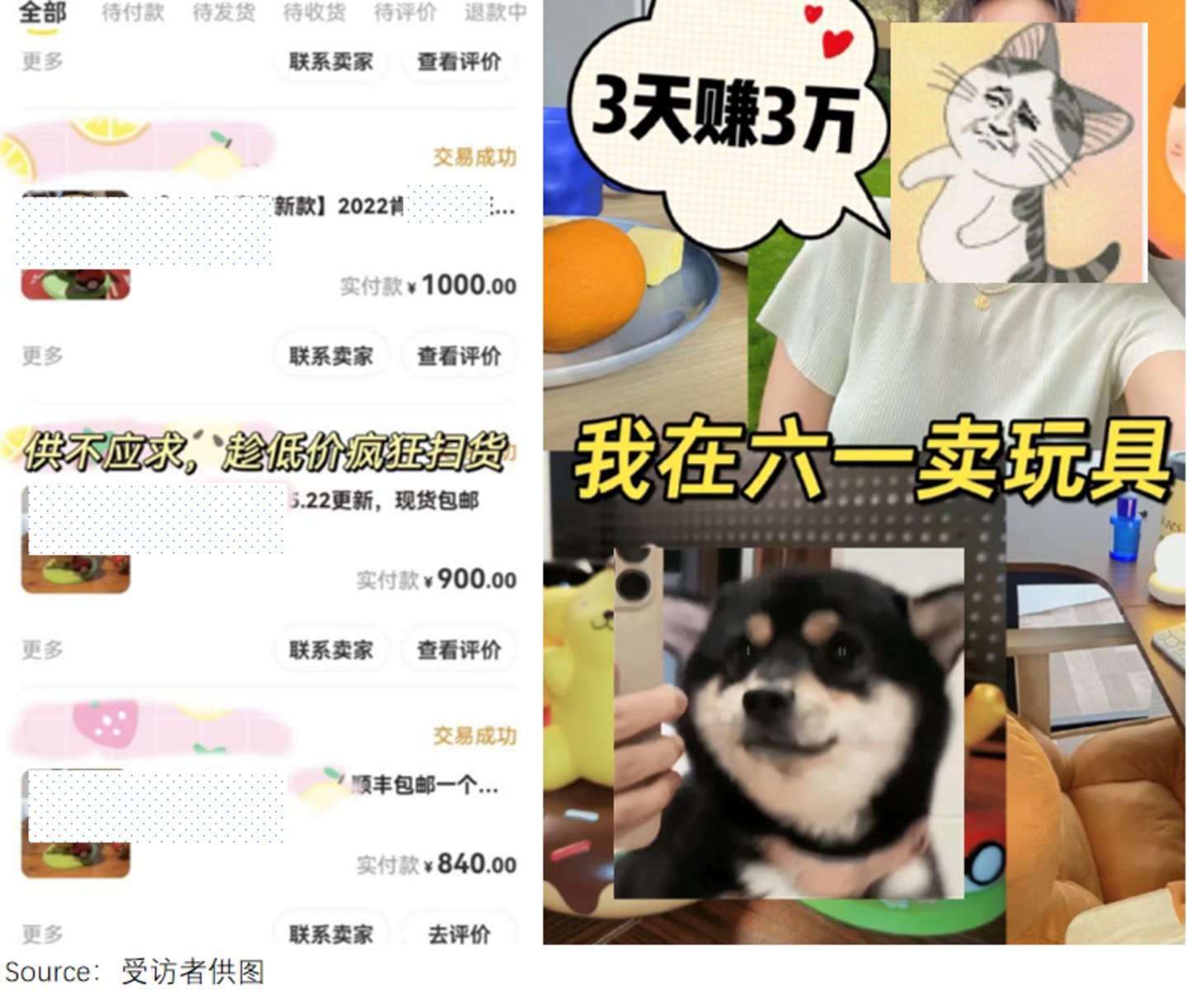
In the end, for anyone serious about a side hustle, self‑improvement and unwavering commitment are mandatory lessons.
Afterword
Even though carving out a niche is hard, the allure of side‑hustle income remains a “beautiful temptation” hanging over the harsh urban landscape, drawing countless dreamers — because it smells like freedom.
A Qing, who has worked in a state‑owned publishing house for years, earns a modest salary and sees no chance of promotion, just grinding away day after day.
“I’ve knitted sweaters for almost every family member, and amidst office gossip, I’ve watched my colleagues’ grandkids grow up,” she sums up her main‑job existence.
Determined not to be assimilated, A Qing turned to side hustles as an escape, launching two at once: a childcare agency and a wine brand consultancy. She didn’t make a fortune, but the side gigs transformed her mindset.
“I no longer stress or overthink work issues. I don’t care about promotions or salary grades. I turn down business trips I don’t want to take and stop maintaining relationships I don’t care about.” Today, A Qing leaves work each day with genuine happiness, rushing to her side projects like a romantic date.
Perhaps for people like A Qing, the main job is something they are pushed into, but the side hustle is a voluntarily chosen ticket to freedom — a mental refuge from the main job.
(All characters in the article are under pseudonyms. Special thanks to blogger “Cao Mei Bing Zi”.)

Want to share your unique insights with millions of tech readers? Submit here. For startup or fundraising reporting, click here.


