The home-use beauty device industry is facing a reshuffle and new transformation.
According to the "Announcement No. 30" issued by the National Medical Products Administration in March 2022, radiofrequency (RF) treatment devices and RF skin treatment devices are to be managed as Class III medical devices. Starting from April 1, 2024, such products that have not obtained medical device registration certificates are not allowed to be manufactured, imported, or sold. In other words, before the new regulation, beauty devices were under the same regulatory category as razors; after the new rule, they fall under the same strict supervision as cardiac pacemakers (Class III medical devices).
As of now, two months after the implementation of the RF home beauty device policy, no brand has yet obtained a Class III medical device registration certificate.
Just two days before the April 1 deadline for the new RF beauty device regulations, the National Institutes for Food and Drug Control (NIFDC) issued an "Interpretation on the Classification Definition of RF Therapeutic Devices and RF Skin Treatment Devices." The document provides detailed clarification on whether RF beauty devices should be classified as Class III medical devices based on product usage. The most significant change is that devices used solely for "non-invasive skin penetration of essences (not for drug or medical device penetration)" are not subject to Class III medical device management. The classification is no longer a one-size-fits-all approach.
Industry insiders view this as a "temporary relief" given that no brand has yet obtained a Class III medical device registration certificate. It does not completely eliminate RF beauty devices but refines the criteria. This means that brands without certificates can still sell and market beauty devices with penetration-enhancing functions, as long as they no longer promote "anti-aging" or "lifting" effects.
After the new regulations, the beauty device market has undergone significant changes. For example, major official flagship stores of leading beauty device brands no longer list any products related to "RF" or "radiofrequency." Consensus across e-commerce platforms like JD.com and Xiaohongshu is to remove all RF-related products from shelves.
This once chaotic market with numerous players is gradually entering a more strictly regulated era. In the past, the beauty device market was a regulatory gray area. Overall, the new regulations raise industry barriers and help control disorderly practices.
A new phase — Beauty Device 2.0 — is unfolding, and the demonstration effect of leading brands will become more evident. After the new rules, brands will undoubtedly reappear with renewed determination.
After RF devices are removed from shelves, where is the new competitive battleground?
Industry experts point out that the most direct impact of the new regulations is that some RF treatment devices holding Class II medical device certificates will need to reapply for Class III certificates when their current registrations expire. This indirectly raises future entry barriers. Moreover, the cost of applying for a Class III medical device registration (including clinical trials and extensive evidence support) is much higher than for Class II, and the timeline is longer (approximately 36 months), which will eliminate smaller players and further increase industry concentration.
Furthermore, thanks to the two-year transition period, some companies have already begun strategic transformations, including re-evaluating technological directions and liquidating RF treatment devices at reduced prices. However, price cuts may also affect corporate cash flow and subsequent R&D investment.
The new regulations mark the end of nearly a decade of "unbridled growth" in home-use RF beauty devices. On one hand, "small household appliances" have become "medical devices," and a wave of clearance sales has just ended, with some small and medium-sized brands exiting the market. In official flagship stores, products like OGP RF, Amiro Collagen Gun, and Huazhi Little Purple Bullet are no longer available. Ji Meng's Tmall flagship store and JD.com self-operated store no longer sell RF beauty devices, and Musu's Tmall flagship store has also removed its RF beauty devices.
In March this year, the home beauty device brand TriPollar sparked "runaway" rumors due to the closure of its Tmall flagship store and the renaming of its official WeChat public account. The brand later explained that the move was due to a change in its China distributor. Nonetheless, TriPollar's store closure cast uncertainty over the market.
In fact, leading beauty device brands began strategic expansions as early as two years ago. Now that "anti-aging" and "lifting" can no longer be used as marketing claims, "penetration-enhancing" efficacy has become a fiercely contested area.
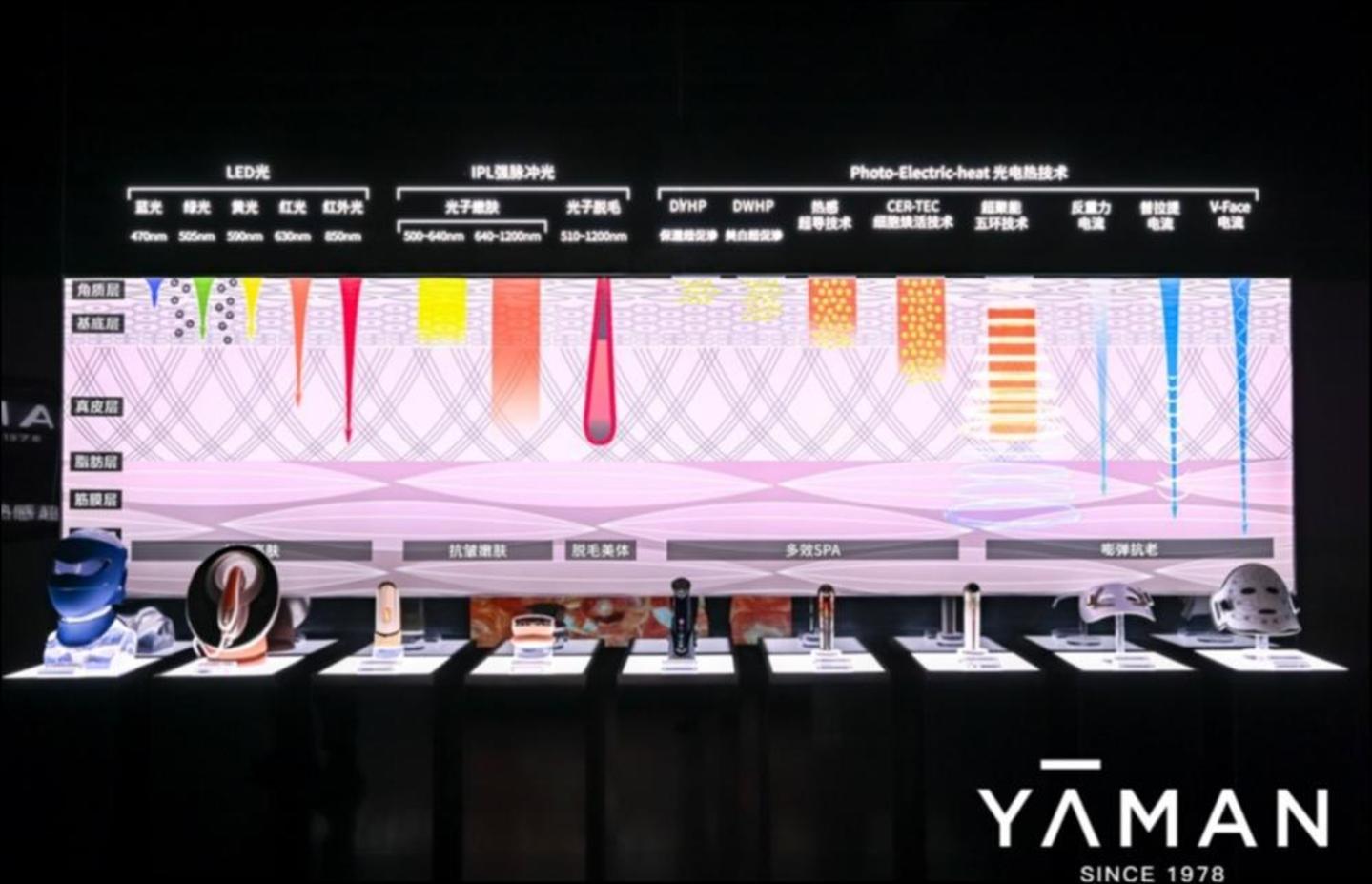
On June 2, Ya-Man, a leading beauty device brand, held an international summit themed "Peak Energy" and launched six new products: Ya-Man MAX Gen 3, Ya-Man Late-Night Repair Device, Ya-Man Ultra-Circle Sculpting Device, Ya-Man Green Light Mask, Ya-Man Sapphire Hair Removal Device, and Ya-Man Ultra-Photon Radiance Device.
Among these, the Ya-Man MAX Gen 3 features the brand's 30 years of proprietary penetration-enhancing technology, capable of customizing penetration waveforms for over 90 whitening products, increasing penetration rates for certain whitening ingredients by up to four times.
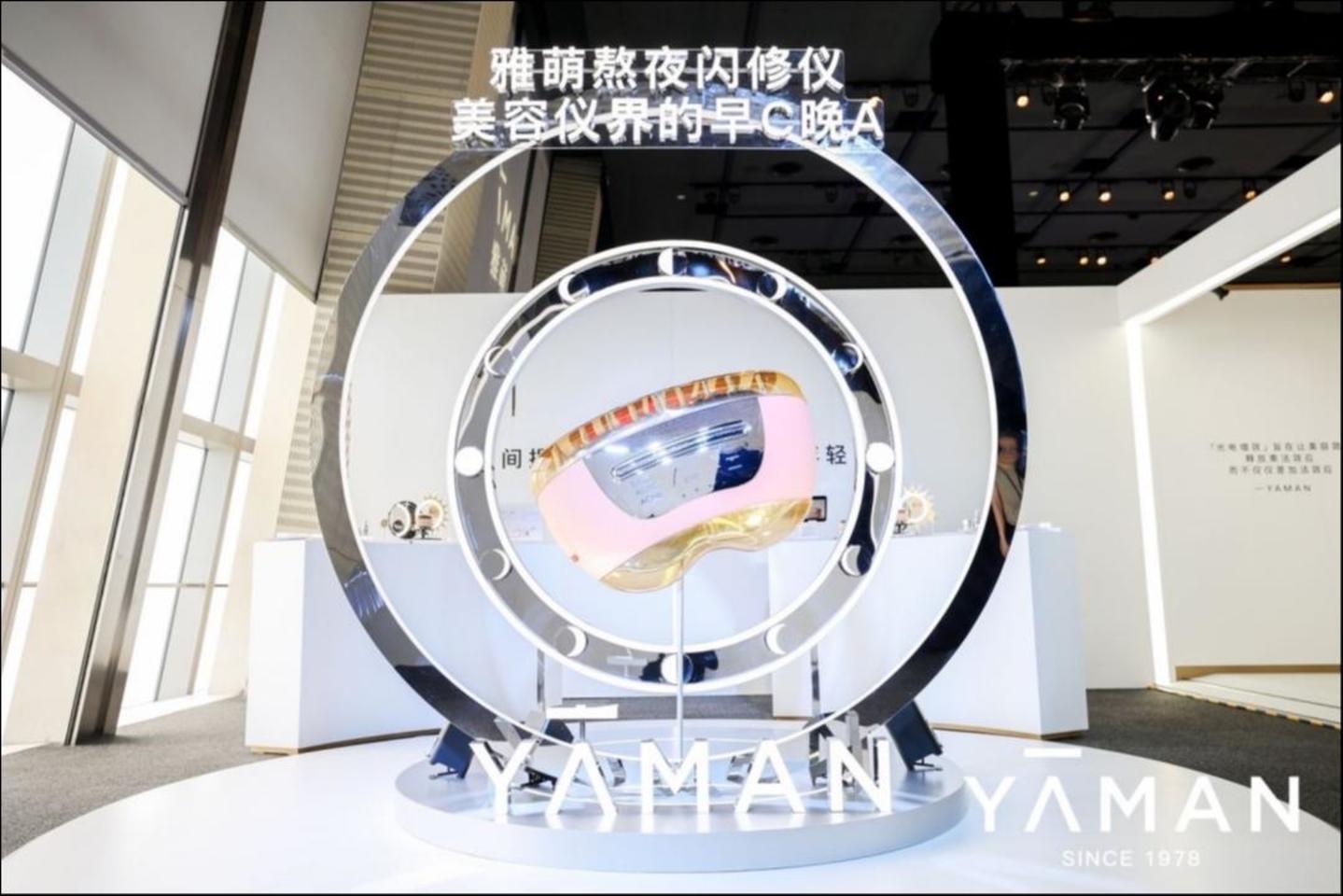
Within Ya-Man's original two product lines, the MAX line has always been positioned as a "multifunctional skincare companion," with penetration technology refined over 30 years. The latest launch adds more segmented and innovative scenarios, including products targeting late-night skin and sensitive skin — "new species" such as the Late-Night Repair Device and the Ultra-Circle Sculpting Device. The Late-Night Repair Device is marketed as the "early C, late A of beauty devices" and positioned as "a young person's first beauty device."
In addition to multifunctional penetration-enhancing devices, Ya-Man launched three light-based products: the Green Light Mask, the Sapphire Hair Removal Device, and the Ultra-Photon Radiance Device. Ya-Man is the first brand in China to apply 505nm green light innovatively to home-use beauty devices.
By emphasizing penetration enhancement and addressing diverse scenario-based needs, and releasing three light-based products at once, Ya-Man is refining its product matrix. The brand's approach is clear: penetration-focused MAX + new scenarios (sensitive skin & late-night repair) + light-based innovations. Beyond core penetration capabilities, innovative scenarios are becoming a new trend. Earlier, Ya-Man had already launched products like a wearable eye-care device that combines skincare.
Notably, Ya-Man is one of the first brands to enter the final stage of Class III medical device regulatory review. According to the National Science and Technology Information System, four beauty device brands — Ya-Man, Huazhi, AMIRO, and OGP — have registered clinical trial records, while other brands have yet to be found. After the review process is completed, they will be able to obtain medical device registration certificates and resume normal market sales.
Beyond Ya-Man, various beauty device brands are also "abandoning" RF devices and launching penetration-enhancing and light therapy devices. For example, this year, AMIRO introduced the painless thermoelectric water-light penetration technology and launched the AMIRO Water Light Gun and the AMIRO Max Light Panel. Ji Meng launched a foldable large light panel, and TriPollar introduced the "Sculpting Gold Engraving Knife" device that combines sound, light, and electricity for synergistic effects.
Ultrasound-based products are also positioned as "skincare companions," emphasizing penetration enhancement, or as new products with anti-aging effects similar to RF devices. Comparisons with RF devices are evident on e-commerce pages. However, Ya-Man did not launch a home-use ultrasound device this time, instead continuing to iterate energy-matched "combination solutions" based on existing technologies.
The Beauty Device 2.0 Era: A Contest of Products and Skincare Philosophy
If the pre-regulation era was Phase 1.0 — characterized by rapid, rough growth led by top brands and plagued by counterfeits — then Phase 2.0 will see truly "effective, safe, and user-friendly" products win consumer loyalty.
From an industry perspective, home beauty devices span dermatology, clinical medicine, biology, and optoelectronics — inherently a specialized field. While the new regulations have initiated the first round of industry consolidation, they have also benefited the market by establishing a foundational consumer awareness of beauty devices.
The home beauty device industry, which has always operated "dancing in chains," has weathered its share of criticism. Gaining genuine consumer recognition is not easy. The future competition will be not only about products but also about skincare philosophies.
Beyond introducing post-regulation products, Ya-Man is advocating a new industry concept: "optoelectronic synergy." Drawing from medical aesthetics, optoelectronic synergy refers to achieving more significant skincare effects by combining photoelectric technology with skincare products — essentially "substance plus energy."
How can home beauty devices achieve effective synergy and integration? This is a question every industry professional must consider.
Since the 2022 regulations, Ya-Man has proposed a "holistic skincare logic" that combines beauty devices with complementary skincare products. The latest product launch articulates this philosophy more clearly. A key industry trend is the emphasis on correct operation and the importance of pairing devices with skincare products. While new "species" of home beauty devices continue to emerge, the core essence remains "effective, safe, and user-friendly."
As technology advances and application scenarios expand, home beauty devices will play an increasingly important role in skincare, and the synergistic outcomes of "pairing" are worth anticipating. Dr. Zheng Yijie, Medical Director of La Roche-Posay, believes there is potential for convergence between home beauty devices and functional skincare products, offering comprehensive and efficient anti-aging solutions.
In the post-regulation era, the leadership effect of top brands is pronounced, yet strategic differences are evident. Unlike the previous emphasis on technology-driven, medical co-creation foundations, Ya-Man's latest launch highlights "substance plus energy" and "holistic skincare," providing deeper insights into scenarios — such as addressing the specific needs of young, late-night users and sensitive-skin anti-aging — with more vertical segmentation and targeted innovation.
From single to diverse, from facial to full-body applications, beauty device brands need to develop new product matrix combinations.
Professor Xiang Leihong, Vice President of the Asian Academy of Dermatology and Venereology, Director of the Dermatology Department at Huashan Hospital, Fudan University, and Chairman of the Dermatology Professional Committee of the Non-Public Medical Institutions Association, notes that consumers should not be made to feel that home beauty devices are a "tax on intelligence." The industry should explore, based on scientific evidence, personalized solutions that include zone-specific skincare, synergy between devices and active ingredients, and precise, controllable energy delivery.
Regarding future trends, Xu Jia, Medical Director of Ya-Man, identifies four major trends: the domestic application of large-device technologies (such as intense pulsed light, ultrasound, and transdermal absorption technologies) — a major trend after RF regulation; the evolution from single RF technology to multi-technology combinations to meet women's dynamic skincare needs with customized solutions; expansion from facial skincare to hair and body care for full-body rejuvenation; and the development from standalone applications to IoT-enabled, cross-scenario solutions with periodic skincare plan updates.
Dr. Li Kai, Ya-Man's dermatology co-research expert and co-founder of Deyi Skin, told TMTpost that there is still a gap this year in research surrounding the application for Class III medical device registration. He believes the trend to watch in 2024 is that LED light sources will see extensive clinical application and become a key anti-aging focus. Additionally, microcurrent-based devices for muscle anti-aging will be more appealing to young people for improving morning puffiness and enhancing facial lift and firmness.
The implementation of the 2024 RF treatment device regulations has once again placed the home beauty device industry at a crossroads, ushering in a new phase of market development. The increased regulation of RF technology undoubtedly represents a massive industry reshuffle, a new challenge, and a new beginning.
In the future, regulations will be further refined. After the dust settles, only enterprises that genuinely promote the healthy development of the beauty device industry will survive. (Originally published on TMTpost APP, author: Liu Dafang, editor: Fang Yu)