
Image generated by AI
“Will AI replace doctors?” In 2025, this question still lingers, but the answer from industry insiders is increasingly consistent — “No.”
The strong regulatory framework in healthcare has defined AI as an “assistant”, moving AI medicine beyond “concept hype” and into a phase driven by both policy and market forces.
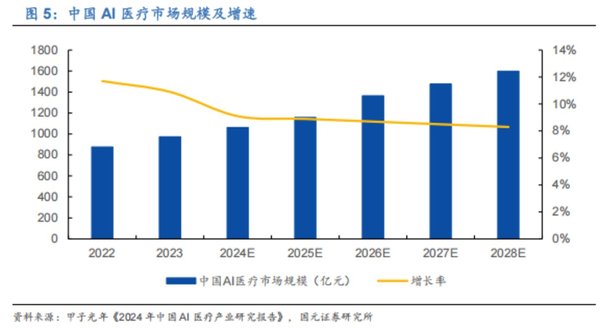
Over the past year, the National Healthcare Security Administration (NHSA) included AI-assisted diagnosis in the立项 guidance for the first time, the “15th Five-Year Plan” clarified the direction for smart healthcare, and five government departments outlined 8 major application scenarios with 24 specific measures. AI imaging coverage now exceeds 80% as the most mature segment, while AI-driven drug discovery shortens R&D cycles by 40% and saves 10% of capital costs. Industry scale is projected to reach RMB 115.7 billion in 2025.
Yet growing pains emerge: medical data is “large but not high-quality”, payment systems remain incomplete, and most companies have not found stable profit paths. We bring insights from Joincare, SenseTime Medical, and MindVision BCI to explore the differentiated picture of AI healthcare 2.0 and the next intersection of sustainability and inclusiveness in the 3.0 era.
The Differentiation “Topography” of Phase 2.0
Aging population and medical resource shortages make AI healthcare a key solution. According to iAijiazi (Jiaziguang), China's AI healthcare market will reach RMB 115.7 billion in 2025, rising to RMB 159.8 billion by 2028 (10.5% CAGR 2022-2028).
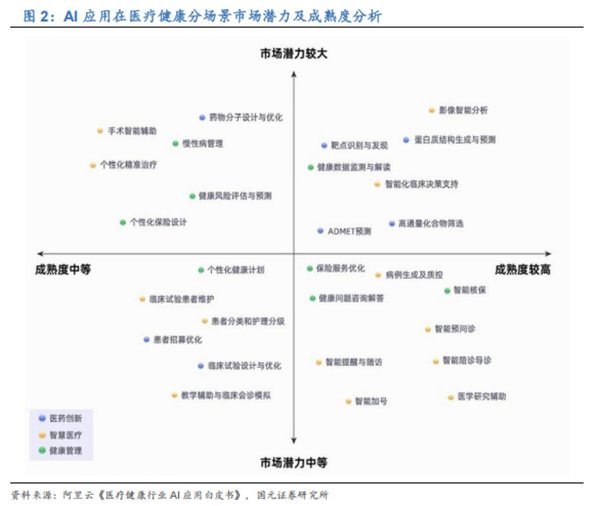
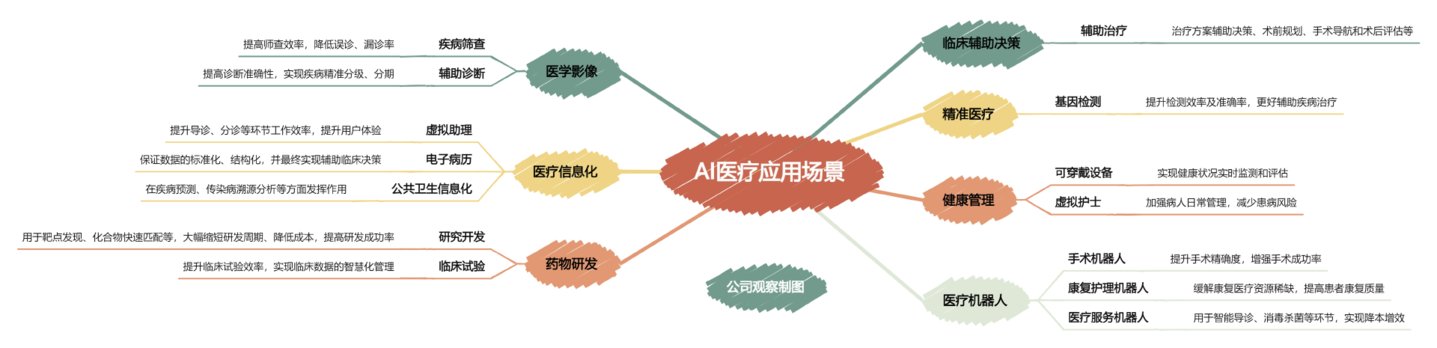
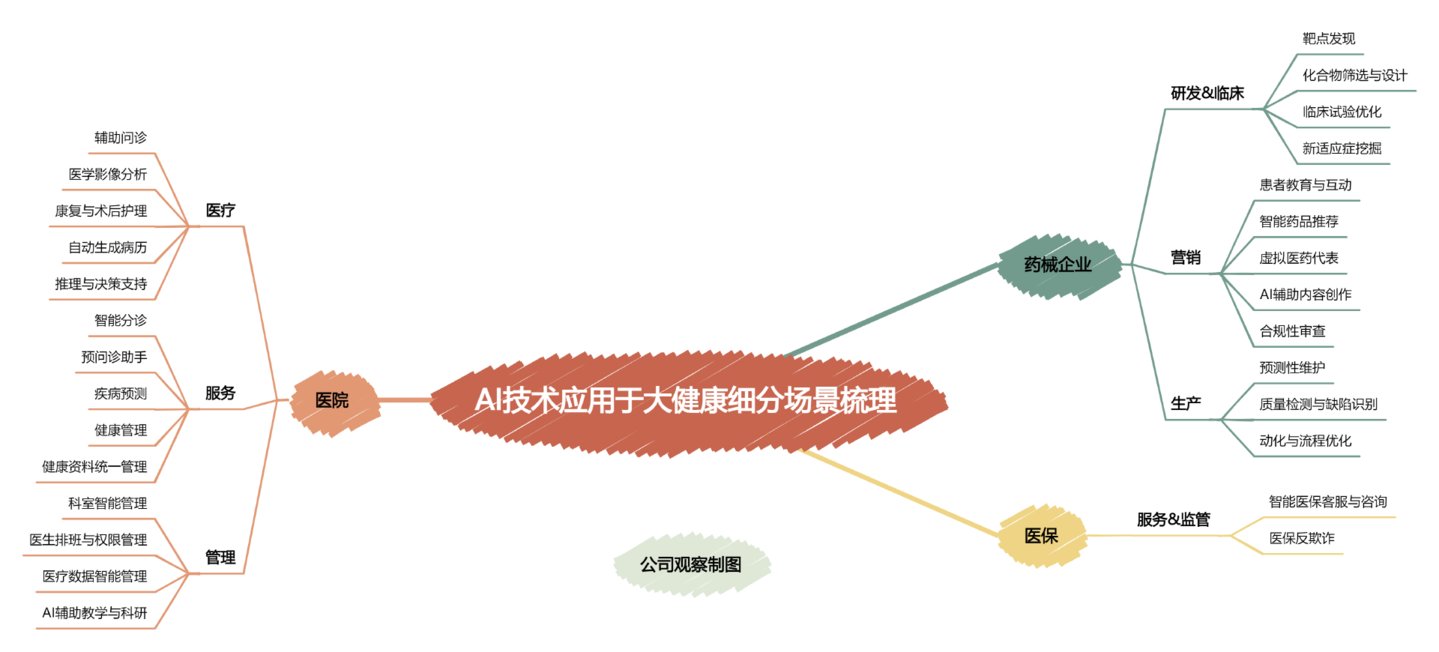
The boundaries of AI medical applications have expanded from single diagnostic tools to drug discovery, decision support, medical informatics, robotics, etc. Imaging analytics, health data monitoring, protein structure prediction are relatively mature, while clinical trial design is still being explored.
By July 2025, 206 algorithm-based medical products had completed health-related registrations, and 75% of new computing power procurement came from hospitals, laying a solid tech foundation for AI-medical integration.
Medical large models are moving from general-purpose to specialized disease areas. Among China’s top 100 hospitals, 98 have deployed large models, and 33 have developed 55 vertical-specific models.
“This is the integrated general-specialist model — general models understand user needs and invoke traditional AI/digital tools to solve real small-scenario problems,” said Qian Kun, co-founder and chief medical officer of SenseTime Medical.
Domestic medical digital transformation has entered Phase 2.0: moving from paperless and digital workflows (1.0) to solving specialty-specific clinical pain points.
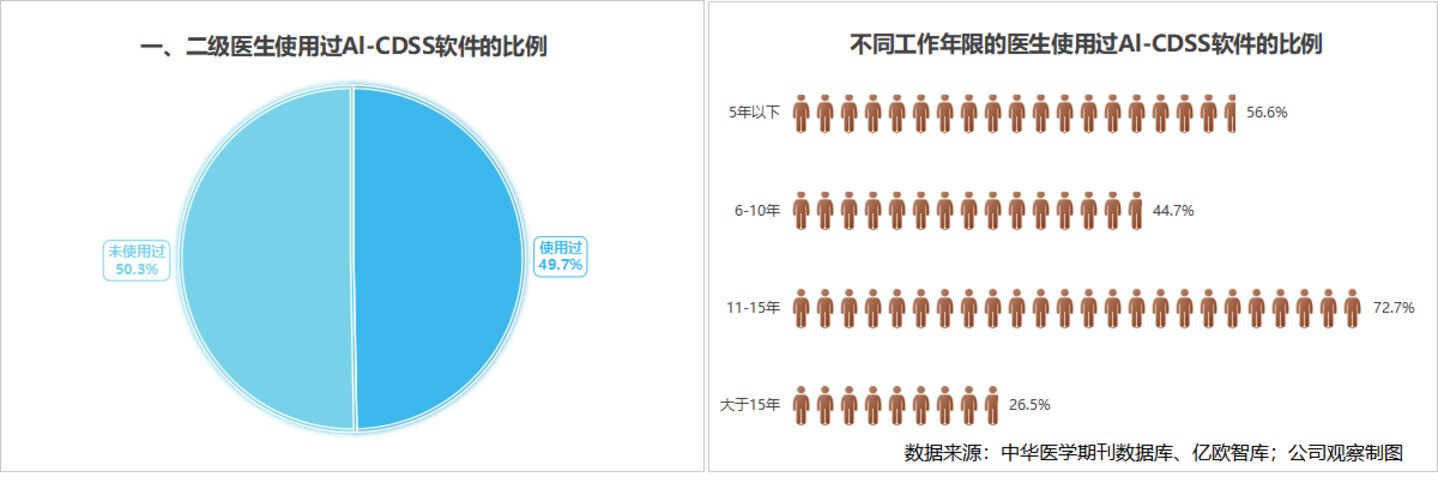
Clinicians’ acceptance of AI has fundamentally shifted. Among primary and secondary hospitals, nearly half of physicians use AI-CDSS; the usage rate is highest (72.7%) for those with 11–15 years of experience, and 56.6% for those with less than 5 years — younger and mid-career doctors are more receptive.
Medical imaging remains the deepest AI penetration: over 70% of clinical diagnoses rely on imaging, AI reduces reading time by 53%, improves detection rate by 17.6%, and increases positive predictive values for recalls/biopsies. China’s AI medical imaging market is expected to exceed RMB 15 billion in 2025 and RMB 23.57 billion in 2026.
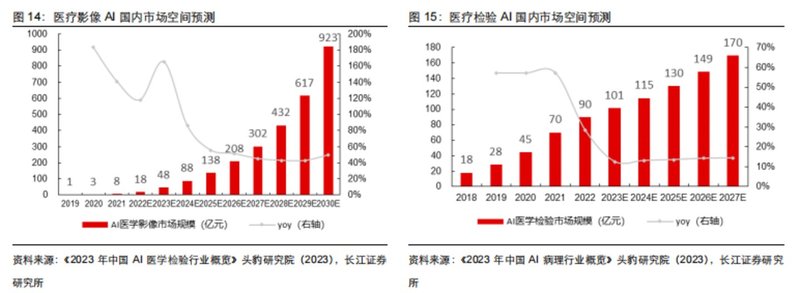
According to Qian Kun, AI coverage in imaging has reached 80–90% in China, far exceeding other departments. CDSS systems provide rich data for AI algorithms.
AI medical testing and AI drug discovery are high-potential sectors: AI testing market is near RMB 10 billion in 2022, expected to reach RMB 17 billion by 2027 (CAGR 13.56%), while AI cuts drug development time by ~40% and saves at least 10% of costs, raising clinical success rate from ~10% to ~14%.
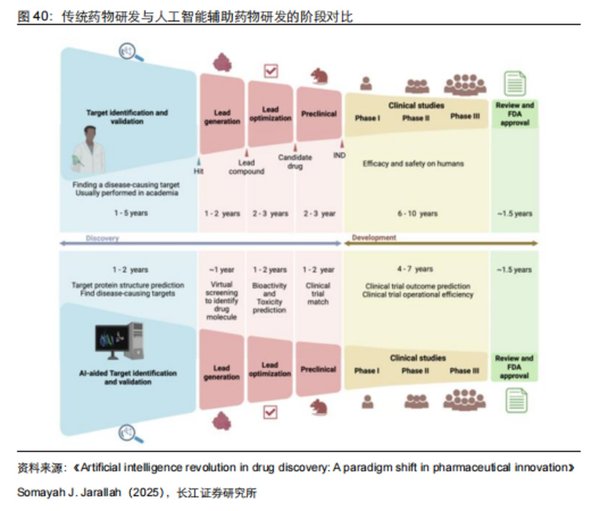
AI pharma companies focus on oncology (37%), immunology (21%) and neurology (14%). China’s AI drug discovery market will grow from RMB 730M in 2024 to RMB 5.86B in 2028, CAGR 68.5%.
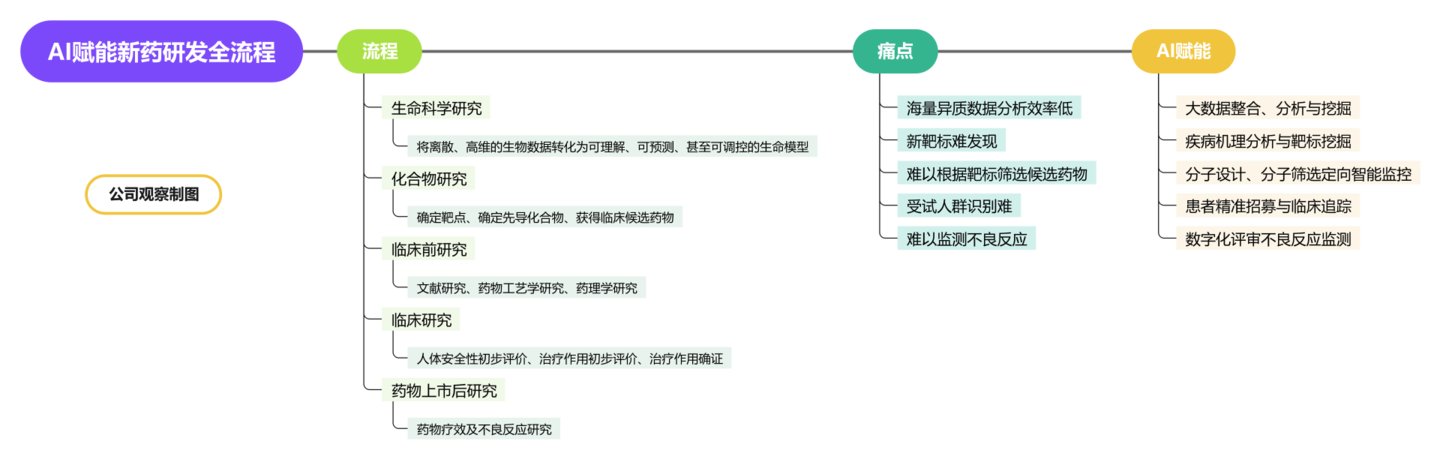
Joincare has integrated AI into drug discovery, compound optimization, project management, and trial recruitment. Lin Peng, head of AI at Joincare, says these steps reduce repetitive labor and accelerate decision-making.
However, no AI-discovered drug has yet been approved globally.
Brain-computer interfaces (BCI) represent another frontier. Non-invasive BCI accounts for 86% of clinical use, focusing on attention/cognitive training, sleep emotion regulation, and closed-loop neural rehab. Neuralink raised large-scale funding; MindVision BCI achieved the world’s first dynamic decoding of complex patterns and colors, moving vision BCI from basic light perception to meaningful visual information reconstruction.
MindVision founder Liu Bing says: “Previously, visual prosthetics only let patients see disordered light spots; now they can see outlines and simple patterns — like a blurry sketch, but with recognition capability.”
AI acts as a “super translator” and “intelligent coach”, converting images into brain-readable electrical stimulation and adjusting parameters in real time — a key step toward useful vision restoration.
Three “Hidden Hurdles” Behind the Boom
Despite progress, data quality, payment, and commercialization remain major barriers that must be crossed.
Data quality and standardization is the top obstacle. China’s 10.11 billion medical visits generate massive data, but standards vary across hospitals; many records are unstructured, affecting AI model training.
Over 50% of doctors work >8h/day, 20.6% >10h — they have little time for detailed records. Data governance in Europe/US is 10+ years ahead.
Companies are exploring solutions: SenseTime advocates starting from payer needs (pharma, insurers, patients) to design data products, then cleaning and pricing. “Aligning interests across multiple parties is tough and costly,” says Qian Kun.
Joincare adopts an agile “useable first, better later” approach: quick feasibility tests, low-cost validation, then iterative investment.
Liu Bing suggests combining clinical centers to build disease-specific databases, using federated learning and synthetic data to maximize value while preserving privacy.
Payment is the engine. At end of 2024, NHSA included AI-assisted diagnosis as an add-on to radiology items, but without extra fees for now. AI is still waiting for clear pricing and insurance access.
“Payment is essentially about value recognition. When AI shows irreplaceable clinical value, payers will include it,” says Liu Bing. Commercial insurance could play a key role.
Qian Kun notes that even in the US, CPT codes for AI are limited. However, with policy push, China may develop a leading payment structure.
Exploring the Inclusive & Sustainable Path of the 3.0 Era
Despite profitability challenges, different tracks have diverged in their commercialization routes. The outlines of AI healthcare 3.0 are emerging, with inclusive medicine becoming a breakthrough direction.
Clinical value is the cornerstone of commercial viability. Liu Bing divides commercialization into three tiers: Tier 1 (mature) medical imaging AI embedded into workflows; Tier 2 (fast-growing) surgical robots/BCI as part of high-value devices; Tier 3 (future) chronic disease management/early screening, awaiting insurance innovation.
DRG/DIP payment reform will accelerate viable business models for hard-tech AI and workflow-optimization AI.
Joincare will use AI across R&D, manufacturing, and commercialization to build a patient-centric precision model.
SenseTime Medical’s “standardized product” strategy avoids over-customization, ensuring cost control, high barriers, fast payback, and steady cash flow.
“We’ve crossed digital transformation 1.0 and entered 2.0. At the door of 3.0, some hospitals are using AI-native foundations to connect multiple AI scenarios and streamline clinical workflows — this could break through the value chain constraints,” says Qian Kun.
“Inclusive healthcare” has become a buzzword: cracking the impossible triangle of quality, accessibility, and cost. Liu Bing proposes first achieving breakthrough “0 to 1” technologies for critical patients, then “1 to N” scaling to reduce costs.
Qian Kun suggests extending the front end to health management: using large models for 80% of basic health Q&A and chronic disease control to reduce severe disease and healthcare spending, ultimately enabling “healthy aging.”
As technology anchors clinical value and business logic returns to industrial essence, AI healthcare will move more steadily into 2026. This health-and-life revolution is writing the future of medicine. (Article | Company Observer, Author: Cao Qian, Editor: Cao Shengyuan)


