Up 575% on Debut? Can Massager Maker Breo Have a Smooth Capital Market Journey?

Up 575% on Debut? Can Massager Maker Breo Have a Smooth Capital Market Journey?
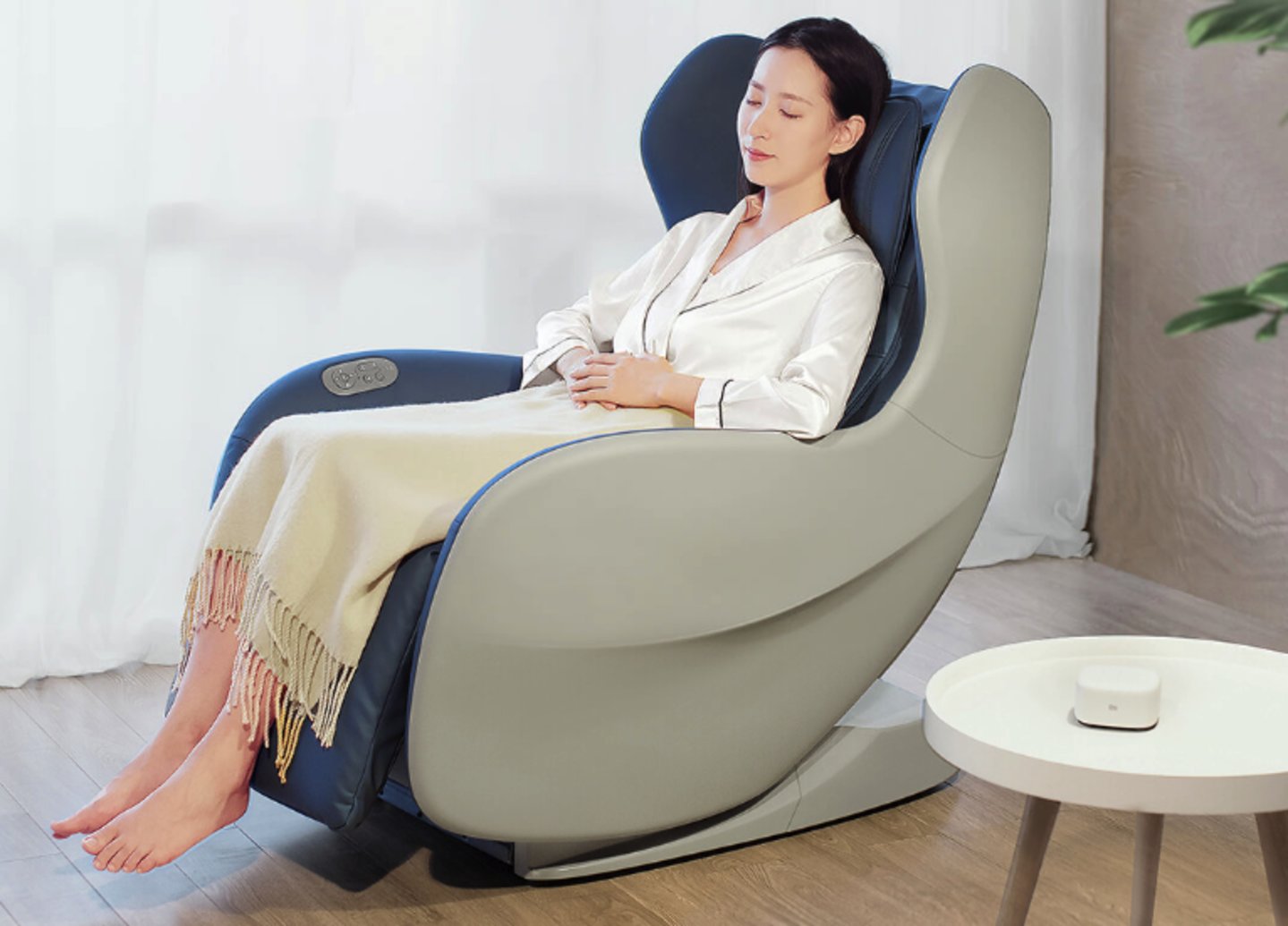
Image credit @Visual China
By Jianghan Vision
In most airports and prime shopping centers, many consumers are drawn to an Apple-esque massager store – that’s Breo.
As a massager juggernaut with annual revenues in the hundreds of millions, it has quietly gone through 20 years.
Now this giant has finally gone public.
Can we be optimistic about Breo's future?
01 Breo Surges 575% on First Trading Day?
According to an announcement from the Shanghai Stock Exchange, Breo listed on the STAR Market on July 15, under stock code 688793.
The offering price was 27.4 yuan per share, with a P/E ratio of 26.92.
It opened at 160 yuan/share, soaring 484% from the offer price, and hit an intraday high of 185.58 yuan an hour later, surging more than 575% in the morning.
At the closing bell (3:00 PM), the stock stood at 171.18 yuan/share, giving the company a market cap of over 10.552 billion yuan.
According to a report by China Economic Net, Breo submitted its STAR Market IPO application last June and began its stock subscription on July 5 this year.
The prospectus shows that Breo intends to raise 497 million yuan from the STAR Market for marketing network construction, R&D center upgrades, and information system improvements.
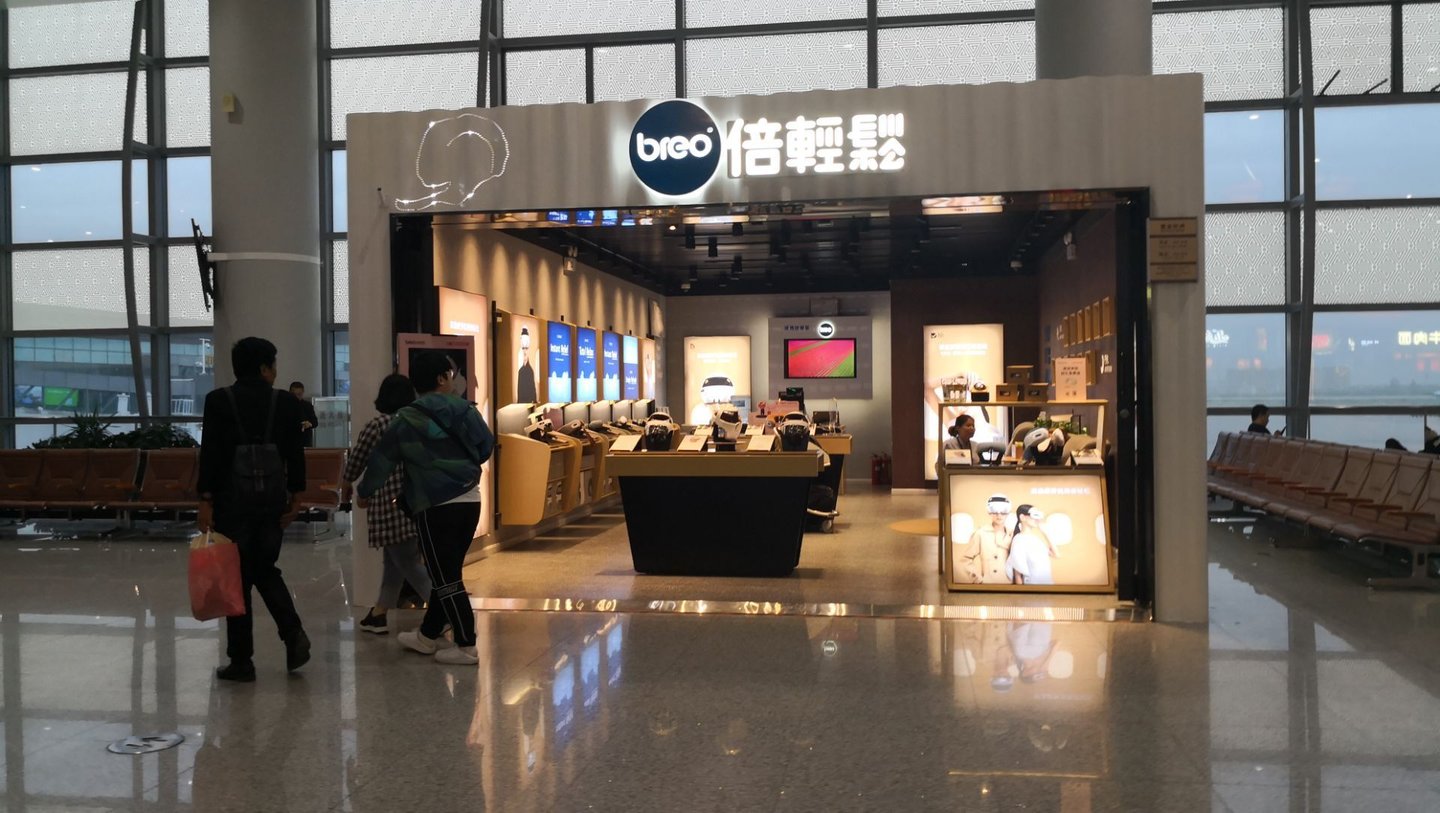
Breo was founded in Shenzhen in 2000.
Riding the wave of Shenzhen's tech innovation and addressing the eye health needs of adolescents, Breo opted to start with eye massagers.
Initially, Breo focused on offline channels, opening more than 150 self-operated stores in first-tier domestic airports and shopping malls.
In the first stage, it iterated products while expanding offline channels, with key markets concentrated in airports and high-speed rail stations, targeting business people around 40 years old.
According to Breo's prospectus, the company still relied mainly on offline channels in 2018 and 2019, with offline sales accounting for more than 50% of its main business revenue.
In 2020, due to the impact of COVID-19, the share of offline channel income dropped sharply to 42.23%.
At the same time, Breo's online sales revenues rose significantly to 52.27%, surpassing offline revenue for the first time.
The prospectus also notes that China has become one of the fastest-growing markets for massage器具 worldwide.
Statistics show that China's massage器具 market expanded from 4.9 billion yuan in 2010 to nearly 15 billion yuan in 2020.
The market explosion brought fierce competition, and veteran Breo chose to embrace AI intelligence as a strategic differentiator.
In 2018, Breo contacted Alibaba's AI Labs, using Tmall Genie's voice control technology to optimize its products.
In May 2019, it launched the first co-branded eye massager IseeX, which not only allows voice commands but also lets users listen to news or music during massage sessions.
The product became an instant hit nationwide, raising annual sales from 50,000 units to over 200,000 units, firmly ranking first in the industry.
So, how should we view Breo? After such a huge first-day rally, will the road be smooth for Breo in the capital markets?
02 Can Breo's Capital Market Road be Easy?
To be honest, I am one of Breo's earliest users.
As early as 2003, I owned my first Breo eye massager.
Over the years, I kept buying more; at one point I had seven or eight Breo products at home.
So I’ll try to analyze Breo’s listing from a user’s perspective.
First, Breo has definitely captured users’ rigid demand.
For a long time, massagers were seen as products for middle-aged and elderly people.
To most young and middle-aged people, massagers felt either uncool or not premium enough.
But in reality, whether for students who are constantly looking down at screens or office workers staring at computers, prolonged sedentary work puts huge pressure on the eyes, neck, and spine.
Discomfort has long plagued these groups.
In that context, both students and white-collar workers have a need for products that relieve physical tension.
Even if Breo’s products do not have genuine medical therapeutic effects, their short-term relief effect is very obvious.
That is undoubtedly the realistic basis for Breo’s long-term existence.
It also explains why Breo has been able to achieve rapid growth over the years, even generating nearly 700 million yuan in revenue in 2019.
Second, the problem Breo faces can be described as a chronic ailment of Chinese manufacturing enterprises.
In the early stage of reform and opening-up, many Chinese companies introduced foreign technology or used research output from domestic institutes, then derived products from that technology.
After that, they mainly focused on marketing to achieve large-scale expansion.
There are many famous examples of this approach, the most notable being Lenovo, which even forced the legendary engineer Ni Guangnan out.
But we must acknowledge that this was a product of the times, a necessary choice for companies to survive in their early days.
A similar phenomenon can be seen in Breo’s development.
We cannot say that Breo’s business model is problematic.
However, once a company becomes primarily marketing-driven, it inevitably develops path dependency.
That is reflected in its financial statements: most of the budget is spent on marketing, while R&D investments remain too low.
That is the main reason for Breo’s underlying issue.
Third, the bloody competition under the internet model.
If the lack of sufficient R&D investment is a historical problem left over from years of accumulated business practices, then the "dimensionality reduction" attack from the internet model is an external shock.
Now both NetEase Yanxuan and Xiaomi Youpin have launched a large number of their own massage products.
Whether in appearance design (often following Apple-like design language) or product experience, they are very similar to Breo's offering, with comparable effects.
Moreover, there are low-cost competitors such as Miniso.
The pressure on Breo cannot be overstated.
From a price standpoint, NetEase Yanxuan and Xiaomi Youpin are not more expensive than Breo, while Miniso provides cheap alternatives.
That is extremely attractive to a vast number of Chinese consumers.
Although Breo has a 20-year history, it has not yet built the brand recognition of European or American luxury goods, nor does it have a true technical moat or market barriers.
That makes the market look huge but easy to enter, with increasingly fierce competition.
For now, Breo’s first-day surge fully demonstrates its appeal to the capital market.
But how much potential and development capability will Breo have after listing? After all, the era of making quick money is over for Breo; long-term growth potential is what really matters.
The content is for reference, exchange, and study purposes only and does not constitute investment advice.
Want to share your novel insights with tens of millions of TMTpost users? Submit here. For entrepreneurial or funding coverage, click here.


